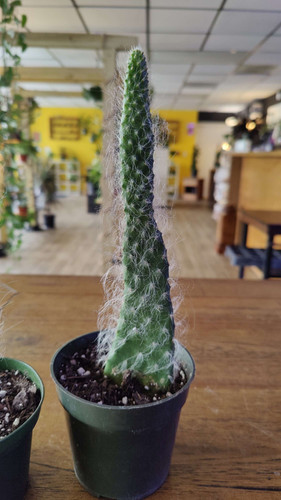
Opuntia Erinacae Ursine ‘Snow White Prickly Pear ‘
ID: #791543
Description
Also known as the Opuntia Erinacae Ursine. The Snow White prickly pear is very unique with its pads covered with white hair and it matures to be 5 feet tall x 4 feet wide. The Snow White Prickly Pear cactus can tolerate moderately cold nights that get down to ten degrees. Fast grower! The Snow White prickly pear makes for a very easy care potted cactus. Always use a well draining cactus and succulent soil when planting. We offer our own growers mix for sale. All that is required when growing the Snow White prickly pear is a minimum amount of water once in a while and because of their faster growth rate, perhaps a hair cut every now and then. In landscapes, the Snow White prickly pear draws immediate contrast with it's surroundings because of the white hair. Plant them in mass for a powerful effect or singly in smaller cactus gardens. At sunset the Snow White prickly pear appears to glow because of it's unique growth habit.
Price
$8.00
Last Updated
10 August 2026, 10:17 UTC
Store Information
physical store
Location
More from The Plant Trap
View all
Monstera Deliciosa
$12.00
Monstera deliciosa, the Swiss cheese plant or split-leaf philodendron is a species of flowering plant native to tropical forests of southern Mexico. Rarely if ever flowering indoors, the beauty of this plant can be seen in any form. Includes one large cutting with two or three leaves. This may include a "leafing" leaf, or leaf that has not fully uncurled. *Pet Friendliness - Not Pet Friendly* Plant Care Instructions: - soil should be chunky, and well draining. - water every one to two weeks - temp 65 to 90 degrees. Common problems: Leaves brown at the edges - underwatered, nutrient build up. Wilting - Underwatered or pot-bound Yellowing leaves - Overwatered Propagation assistance: Monstera Deliciosa can be very easy to propagate using a sharp pair scissors and a couple of jars of water. Take cuttings at the node. A node can be found near aerial root locations. This is where new leaves and roots form. Cut here and place in water. Change the water weekly and wait. Patience is your friend on this journey but worth the process.

Monstera Adansonii Swiss Cheese
$15.00
A native to Costa Rica and known more commonly by its nickname, the "Swiss Cheese" plant, or Monstera Adansonii is popular for the unique holes throughout it's leaf. *Pet Friendliness - Not Pet Friendly* Plant Care Instructions: - soil should be light, and well draining. - water every one to two weeks - temp 65 to 90 degrees. Common problems: Leaves brown at the edges - underwatered, nutrient build up. Wilting - Underwatered or pot-bound Yellowing leaves - Overwatered Propagation assistance: Monstera Deliciosa can be very easy to propagate using a sharp pair scissors and a couple of jars of water. Take cuttings at the node. A node can be found near aerial root locations. This is where new leaves and roots form. Cut here and place in water. Change the water weekly and wait. Patience is your friend on this journey but worth the process.

Alocasia Sinuata Quilted Dream
$15.00
About: Similar to the Alocasia Dragon Scale this Alocasia has textured leaves which make it appear bumpy and you can see the veining through that leaves. This houseplant grows taller and has a bright green color. *Pet Friendliness - Not Pet Friendly* Care: Light: Prefers bright, indirect light. A small amount of direct sun is OK but too much will scorch the leaves. Temperature: This plant will thrive at temperatures of 62-85F. Water: Drench thoroughly then allow the top 1 inch of soil to dry out before watering again. Water less frequently in winter months when the plant's growth slows.. Humidity: High. To raise the humidity around your plant, place the pot in a shallow saucer full of pebbles. Add water to the saucer until the pebbles are almost submerged. This will create a humid environment for the plant.

Alocasia Amazonica Polly
$15.00
Alocasia amazonica 'Polly' is a compact houseplant from the elephant ear family, known for its distinctive glossy leaves that conjure up images of an Amazonian jungle —despite not being from the Amazon (or any jungle, for that matter). Also known as the African mask plant, it's the most popular Alocasia grown indoors. *Pet Friendliness - Not Pet Friendly* Light Alocasia Polly thrive in medium to bright, indirect sunlight. Be aware that they are not suited to low light or direct sunlight - which can scorch their leaves. Water Alocasia Polly enjoy weekly watering sessions and frequent misting, keeping their soil moist but not wet. In winter, we recommend allowing the top 2’ of soil to dry out between waterings to prevent overwatering and root rot. This plant is not drought tolerant, and extended periods of dryness will cause leaf edges to brown. Humidity Your Alocasia Polly will also appreciate being placed in a humid environment, which you can create by misting it frequently, placing it close to other plants or on a pebble tray partly filled with water. Temperature Your Alocasia Polly will thrive in temperatures ranging from 18-25ºC. Avoid abrupt temperature changes and cold drafts. Fertiliser Feed with general houseplant fertiliser monthly during the growing season (spring to summer). Toxicity Alocasia Polly is toxic to both people and animals - keep away from small children and pets. Additional Care Alocasia Polly can easily be propagated in water because of its semi-aquatic, swamp-dwelling ancestors. During the plant’s dormancy, move it to somewhere warm and reduce your watering until it starts growing again in spring. Troubleshooting • Yellowing or spotting on leaves: suggests the plant has been overwatered - make sure you allow the top soil to dry out before watering the plant again, especially in winter. • Browning edges: indicate the plant has either been underwatered or scorched by direct sunlight. Make sure your Alocasia Polly only receives bright, indirect sunlight. • Leaves fading and dying in fall/winter: Alocasia Polly goes into dormancy as temperatures drop and days shorten. Don’t panic if this happens, but reduce your watering.

Philodendron Summer Glory
$18.00
Philodendron “Summer Glory” is a new hybrid of Philodendron Gloriosum and an unnamed McColley’s hybrid. The new leaves on “Summer Glory” emerge a pinkish red before hardening off to green. “Summer Glory” has a terrestrial growth habit and will not climb. *Pet Friendliness - Not Pet Friendly* Additional info: Philodendron is one of the most popular genuses of Aroid that are currently in cultivation, with over 450 named cultivars. Philodendron vary greatly in their natural habits, but you will find a large number of them located in Latin America. Their leaves range from small to medium to large to gigantic! You'll find Philodendron with smooth, glossy foliage and some with velvety foliage! If you allow Philodendron to climb, their foliage will usually get much larger the higher up they get. While this isn't true for all Philodendron species -- it is for most. We recommend a coco pole to really get your Philodendron growing! For the most part, Philodendron are easy to care for. The name Philodendron comes from the greek words "philo" (love or affection) and "dendron" (tree).

Alocasia Chantrieri African Mask
$30.00
About: Alocasias, commonly known as an "Elephant Ear," are known for its distinctly shaped leaves. This 'Chantrieri' variety is less common and features bold, deep green leave with a strong burgundy underside. The dark rubbery foliage emerges a with a deep inky blue tint. *Pet Friendliness - Not Pet Friendly* LIGHT: Bright indirect light or direct morning sun. Avoid strong afternoon sun. Rotate regularly to keep plant growing symmetrically. WATER: Allow top 25% of the soil to dry slightly between waterings. POTTING: Not recommended for potting in a container without a drain hole. Plants must have a well-draining soil medium to ensure the roots do not rot. FERTILIZE: Spring through fall 1x/mo with 1/2 strength fertilizer TOXICITY: This plant is toxic.