The Plant Trap
Physical Store909, East Church Avenue, Longwood, 32750, FL, US
Location
Is this your store? Claim this listing to update your info, add photos, and reach more customers.
Products (100)

Monstera Deliciosa
$12.00
Monstera deliciosa, the Swiss cheese plant or split-leaf philodendron is a species of flowering plant native to tropical forests of southern Mexico. Rarely if ever flowering indoors, the beauty of this plant can be seen in any form. Includes one large cutting with two or three leaves. This may include a "leafing" leaf, or leaf that has not fully uncurled. *Pet Friendliness - Not Pet Friendly* Plant Care Instructions: - soil should be chunky, and well draining. - water every one to two weeks - temp 65 to 90 degrees. Common problems: Leaves brown at the edges - underwatered, nutrient build up. Wilting - Underwatered or pot-bound Yellowing leaves - Overwatered Propagation assistance: Monstera Deliciosa can be very easy to propagate using a sharp pair scissors and a couple of jars of water. Take cuttings at the node. A node can be found near aerial root locations. This is where new leaves and roots form. Cut here and place in water. Change the water weekly and wait. Patience is your friend on this journey but worth the process.

Monstera Adansonii Swiss Cheese
$15.00
A native to Costa Rica and known more commonly by its nickname, the "Swiss Cheese" plant, or Monstera Adansonii is popular for the unique holes throughout it's leaf. *Pet Friendliness - Not Pet Friendly* Plant Care Instructions: - soil should be light, and well draining. - water every one to two weeks - temp 65 to 90 degrees. Common problems: Leaves brown at the edges - underwatered, nutrient build up. Wilting - Underwatered or pot-bound Yellowing leaves - Overwatered Propagation assistance: Monstera Deliciosa can be very easy to propagate using a sharp pair scissors and a couple of jars of water. Take cuttings at the node. A node can be found near aerial root locations. This is where new leaves and roots form. Cut here and place in water. Change the water weekly and wait. Patience is your friend on this journey but worth the process.

Alocasia Sinuata Quilted Dream
$15.00
About: Similar to the Alocasia Dragon Scale this Alocasia has textured leaves which make it appear bumpy and you can see the veining through that leaves. This houseplant grows taller and has a bright green color. *Pet Friendliness - Not Pet Friendly* Care: Light: Prefers bright, indirect light. A small amount of direct sun is OK but too much will scorch the leaves. Temperature: This plant will thrive at temperatures of 62-85F. Water: Drench thoroughly then allow the top 1 inch of soil to dry out before watering again. Water less frequently in winter months when the plant's growth slows.. Humidity: High. To raise the humidity around your plant, place the pot in a shallow saucer full of pebbles. Add water to the saucer until the pebbles are almost submerged. This will create a humid environment for the plant.

Alocasia Amazonica Polly
$15.00
Alocasia amazonica 'Polly' is a compact houseplant from the elephant ear family, known for its distinctive glossy leaves that conjure up images of an Amazonian jungle —despite not being from the Amazon (or any jungle, for that matter). Also known as the African mask plant, it's the most popular Alocasia grown indoors. *Pet Friendliness - Not Pet Friendly* Light Alocasia Polly thrive in medium to bright, indirect sunlight. Be aware that they are not suited to low light or direct sunlight - which can scorch their leaves. Water Alocasia Polly enjoy weekly watering sessions and frequent misting, keeping their soil moist but not wet. In winter, we recommend allowing the top 2’ of soil to dry out between waterings to prevent overwatering and root rot. This plant is not drought tolerant, and extended periods of dryness will cause leaf edges to brown. Humidity Your Alocasia Polly will also appreciate being placed in a humid environment, which you can create by misting it frequently, placing it close to other plants or on a pebble tray partly filled with water. Temperature Your Alocasia Polly will thrive in temperatures ranging from 18-25ºC. Avoid abrupt temperature changes and cold drafts. Fertiliser Feed with general houseplant fertiliser monthly during the growing season (spring to summer). Toxicity Alocasia Polly is toxic to both people and animals - keep away from small children and pets. Additional Care Alocasia Polly can easily be propagated in water because of its semi-aquatic, swamp-dwelling ancestors. During the plant’s dormancy, move it to somewhere warm and reduce your watering until it starts growing again in spring. Troubleshooting • Yellowing or spotting on leaves: suggests the plant has been overwatered - make sure you allow the top soil to dry out before watering the plant again, especially in winter. • Browning edges: indicate the plant has either been underwatered or scorched by direct sunlight. Make sure your Alocasia Polly only receives bright, indirect sunlight. • Leaves fading and dying in fall/winter: Alocasia Polly goes into dormancy as temperatures drop and days shorten. Don’t panic if this happens, but reduce your watering.

Philodendron Summer Glory
$18.00
Philodendron “Summer Glory” is a new hybrid of Philodendron Gloriosum and an unnamed McColley’s hybrid. The new leaves on “Summer Glory” emerge a pinkish red before hardening off to green. “Summer Glory” has a terrestrial growth habit and will not climb. *Pet Friendliness - Not Pet Friendly* Additional info: Philodendron is one of the most popular genuses of Aroid that are currently in cultivation, with over 450 named cultivars. Philodendron vary greatly in their natural habits, but you will find a large number of them located in Latin America. Their leaves range from small to medium to large to gigantic! You'll find Philodendron with smooth, glossy foliage and some with velvety foliage! If you allow Philodendron to climb, their foliage will usually get much larger the higher up they get. While this isn't true for all Philodendron species -- it is for most. We recommend a coco pole to really get your Philodendron growing! For the most part, Philodendron are easy to care for. The name Philodendron comes from the greek words "philo" (love or affection) and "dendron" (tree).

Alocasia Chantrieri African Mask
$30.00
About: Alocasias, commonly known as an "Elephant Ear," are known for its distinctly shaped leaves. This 'Chantrieri' variety is less common and features bold, deep green leave with a strong burgundy underside. The dark rubbery foliage emerges a with a deep inky blue tint. *Pet Friendliness - Not Pet Friendly* LIGHT: Bright indirect light or direct morning sun. Avoid strong afternoon sun. Rotate regularly to keep plant growing symmetrically. WATER: Allow top 25% of the soil to dry slightly between waterings. POTTING: Not recommended for potting in a container without a drain hole. Plants must have a well-draining soil medium to ensure the roots do not rot. FERTILIZE: Spring through fall 1x/mo with 1/2 strength fertilizer TOXICITY: This plant is toxic.

Alocasia Cuprea Red Secret
$18.00
About: Alocasia Cuprea ‘Red Secret’ has an extraordinary foliage that has a metallic shine to it. It is an exceptionally decorative plant! Its red-like leaves with dark almost black markings look fabulous and dramatic. This Alocasia stays compact and its suitable for terrariums. *Pet Friendliness - Not Pet Friendly* Luminous and iridescent Alocasia with a variety of metallic deep red and green leaves that seem to change form when approached from different angles. To date, Iridescent plants have only been found in the lower canopy of Asian rainforests and a handful of other locations, which makes this Alocasia an extremely rare and fantastic variety, as well as a unique find for plant enthusiasts! Plants at the bottom of these dense tropical forests get a tiny fraction of the light above the canopy. To cope, these special plants have adapted to reflect light, allowing them to bounce the sunlight between their leaves. Lovely outwards grow to create relaxed jungle environments. Alocasias broad leaves make them great air purifying plants, as part of their photosynthesis, they filter our VOCs and COs indoors in big amounts. Looking to purify your complete home with your own Alocasia Collection?

Philodendron Melanochrysum
$22.00
Philodendron melanochrysum is a rare type of philodendron with a vining habit and a set of velvety dark-green foliage. The leaves can grow up to 24 inches long and have a distinctly yellow to green venation. Such attributes make the Melano plant a highly covetable green ornament – ideal for houses and gardens. *Pet Friendliness - Not Pet Friendly* Plant care instructions: To care for Philodendron melanochrysum use well-draining soil using potting soil, peat moss, perlite, orchid bark, and charcoal. Provide bright indirect light and a temperature between 70-80°F (21-27°C). Water once once the top 2-3” of soil are almost dry about once a week and provide a humidity of >60% if possible. Fertilize in spring and summer using a liquid fertilizer.mm

Philodendron Narrow Jungle Boogie
$15.00
Believed to be a Thai hybrid, Philodendron ‘Jungle Boogie’ has long, narrow leaves with distinctive, deep serration all along the leaf edges. Leaves can reach 2-3’ in length. It makes an attractive, easy-to-grow plant for low light areas of the home that need some greenery, and it adds exotic appeal wherever it’s grown. *Pet Friendliness - Not Pet Friendly* Light: Like many indoor plants, Philodendron Jungle Boogie prefers bright indirect light for 6-8 hours per day. Remember, you’re trying to recreate the low light conditions in the rainforests of Mexico, the Caribbean, Central and South America. Placing this plant near an east or west-facing window or in the low-light areas of the home works well in most situations. You’ll know your Philodendron Jungle Boogie is getting too much light when its leaves may show signs of getting scorched. On the other hand, if it doesn’t get enough light, its stems may get leggy. Watering: The watering frequency will vary based on the temperature and the humidity in your plant’s surroundings. Generally speaking, your Philodendron Tiger Tooth prefers a relatively dry growing medium.Avoid overwatering your Philodendron Tiger Tooth. When the soil’s top two inches are dry, it’s time to give your plant a drink. The best way is to water directly on the soil and take care not to wet its narrow leaves so you can avoid fungal diseases.Allow the water to flow through the bottom of the pot. Remember to empty the collection tray if your plant is sitting in one. Avoid putting your Philodendron Jungle Boogie in direct sunlight, as this could severely damage or even kill it.

Alocasia Boa
$15.00
About The Alocasia Boa has stunning tropical foliage on an upright, easy-to-grow plant. It is excellent in mixed plantings or as an individual specimen. Grow this plant indoors or outdoors (if you’re in the right region). This plant is loved for its elephant ear shape and ability to grow quite large! But don’t worry you can keep this plant smaller as well by growing inside. The Alocasia Boa Elephant Ear is sure to give any room a tropical flare. *Pet Friendliness - Not Pet Friendly* Light Elephant ears like partial sun exposure outdoors, or when grown indoors bright light. If leaves look bleached or burnt move the plant to a shadier spot. Water For watering, keep this plant consistently moist. Do not oversaturate. This plant also loves humidity!

Calathea Ornata Pin Stripe
$15.00
Calathea ornata is a gorgeous tropical plant with snazzily striped leaves, which is why it’s often called Pin-stripe Calathea. One great bonus of Calathea Ornata is that it is not toxic to pets at all, unlike so many tropical plants. This rainforest native can be a little temperamental, but its lush, vibrant foliage makes it worth the trouble. *Pet Friendliness - Not Pet Friendly* Light In the rainforests, Calathea ornata grows in the dappled light that is created by the tropical sun being filtered by the tree canopy. In your home, Calathea ornata light requirements are for bright but indirect light. No matter what direction your rooms face, you should be able to find a spot that meets Pin-stripe Calathea light needs. You absolutely must keep your Calathea ornata out of the full sun. Even if the harsh rays don’t burn the delicate foliage, too bright light will fade the pink pinstripes that make this plant so attractive. In a south-facing room, keep them out of the direct sun. However, in an east or north-facing room, they will thrive right next to the window. Watering When it comes to Calathea ornata watering, it can take a bit of a delicate balancing act to get its watering needs just right. In the rainforests where they grow wild, Calathea ornata grow in soil that is always moist, but never saturated with water. Their roots need to be able to breathe. Water Pin-stripe Calathea every week, but check the soil surface first. If the top inch has dried out, gently add more water to wet the surface evenly. It’s best to use distilled or rain water, but if all you have is tap water, let it sit overnight to dissipate the chemicals used to treat municipal water. Temperature The ideal temperature for Pin-stripe Calathea is between 65 to 85ºF (18 to 29ºC), which is not surprising for a tropical native.

Alocasia Regal Shield
$20.00
About: The Alocasia Regal Shields loves to bask in the light and can really lighten up your home. Whether you keep it inside your home or grow it in your garden, make sure to give it just the right amount of water so that your plant does not go bad. It is a great option for people with green thumbs as the plant is popular for its velvety black and red hues that are rare. These plants only grow up to 3-6 feet, which means that you can easily keep them in your home or in the office. *Pet Friendliness - Not Pet Friendly* Use high-quality fertilizers and keep away from the salt formation and you are good to go. If there are yellow or droopy leaves then there is a high chance that your plant has a problem. Pests Aphids, Fungus Gnats, Spider Mites, and Mealybugs are the most common insects that can harm your plant. If you notice that your plant is being infested with such insects then you can either use neem oil to clean the surface of the leaves or use an insecticidal soap. Not only will these solutions kill the insects but it will also keep other pests off. Disease Some of the most common diseases for the Alocasia Regal Shield include the browning of the leaf edges or brown spots on the surface of the leaf. This may be due to a lack of water or humidity, make sure that your plant has enough water. On the other hand, if you see some yellow spots on the leaves then it is possible for your plant to be infested by insects. Pruning Like other house plants, you do not need to prune the Alocasia Regal Shields. All you need to do is trim the discolored leaves. You can also pull the damaged and dead leaves to make sure your plant is as healthy as possible. Propagation To propagate the plant you need to divide the rhizome. If you want to propagate effectively then you must do it in the spring or summer. This is when the growing season starts and your plant will grow easily. Potting/Repotting It is important for you to repot your plant at least once every two years. If you see roots coming out of the drainage holes then it’s time you start repotting.

Alocasia Maharani
$18.00
About: Alocasia Maharani, Also known as Alocasia Grey Dragon, is one of the jewel alocasias popular for its unique, decorative foliage. Alocasia Maharani is a hybrid related to Alocasia Black Velvet and features compact, matte green leaves with deep veining and heavy texture that resembles scales. Maharani is one of the smaller Alocasias, growing to a little over a foot in height. Alocasia Maharani are tricky plants but reward plant parents with unique foliage. Alocasia maharani thrive in bright indirect light; too little light and this house plant will grow stretched. It’s best to be cautious with watering until you get a feel for how much water your plant requires as overwatering can do a lot of damage quickly, but once you get the hang of it this plant is easy to maintain. *Pet Friendliness - Not Pet Friendly* Light Alocasia Maharani thrive in bright, indirect light. Water Water your Alocasia evenly, and only when top two inches of soil are completely dry. Temperature Alocasia plants do best in temperatures between 60 - 80°F, and will stop growing at colder temps. Fertilizer Apply a balanced houseplant fertilizer to your Alocasia at half strength once every 1 - 3 months

Alocasia Lauterbachiana Purple Sword
$15.00
About: Alocasias needs to be kept in a warm and humid environment if not humid enough, your plant has been burnt by direct light, or it is unhappy about being exposed to cooler temperatures. You may ultimately loose this leaf, but by changing the environmental conditions that you believe are failing, you will be able to prevent it from occurring to the other leaves on your plant. *Pet Friendliness - Not Pet Friendly* Yellowing or loss of leaves: Over watering will cause your Alocasia to have yellowing leafs which it eventually drop as a key survival tactic. Leaf dropping can also occur due to under watering. Alter your watering regime and check your plant has good air circulation. Once this is corrected your plant should grow new healthier leaves. The yellowing of one smaller, older, leaf can also be a sign that your plant is simply reinvesting it’s energies into its new growth. Check to see if a new leaf is present at the same time as the yellowing of the older leaves are found. This will explain the issue and is considered quite a normal process for Alocasia’s. Spider Mite: Is a bug that tends to be drawn to Alocasia’s. A key indicator to keep an eye out for is a grey discolouration on your Alocasia leaves
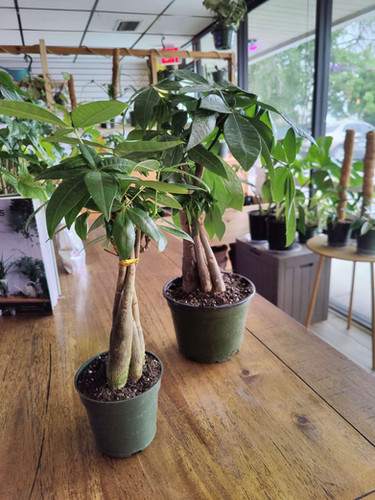
Money Tree
$15.00
About: *PET FRIENDLY* Said to bring good luck and fortune, the Money Tree is the perfect plant to add to any room of your home to create good Feng Shui. It is known for its resilience, ease of growth, and fun braided trunk. LIGHT Your Money Tree prefers indirect bright light, and can adjust to lower light. Too much direct light will scorch the leaves, but too little light will cause slow growth and yellow leaves. Rotate your plant monthly to keep growth even. WATER Water your Money Tree when the soil volume is 50-75% dry. Always check the soil moisture before watering. Water thoroughly until you see water flow out of the drainage hole and discard any excess water in the saucer. HUMIDITY Your Money Tree does well in average household humidity. However, if the air is very dry it will appreciate the occasional humidity boost. TEMPERATURE Your Money Tree is most comfortable in temperatures between 65-80°F. FOOD Feed once a month in the spring and summer when it is producing new leaves with a general-purpose fertilizer at half strength. Always make sure the soil is damp before applying any fertilizer. TOXICITY Money Trees are considered non-toxic and pet friendly. ADDITIONAL CARE Try not to move your Money Tree very often, since they prefer a consistent environment. If you do need to relocate it, you may see a bit of leaf drop. Not to worry—it will adjust. Prune any discolored leaves as they age with sharp snips.
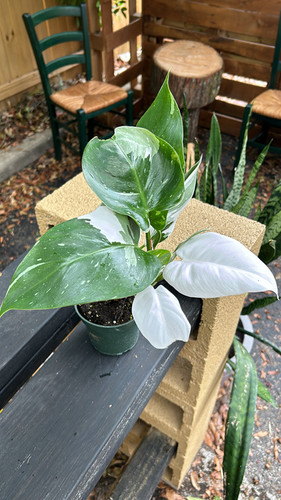
Philodendron White Wizard
$25.00
Philodendron 'White Wizard' is one of the most rare and desired tropical houseplants and it's easy to see why. Its stems are a beautiful red with white variegation while the leaves are variegated in bright white to varying degrees. The White Wizard Philodendron is a striking climbing houseplant. It sports lovely, white-variegated foliage and has an easy-care nature. Traditionally a hard-to-find houseplant, it’s relatively slow growing thanks to its leaf pattern. The more variegation, the slower it grows as there’s less chlorophyll to convert light into energy for the plant to grow. *Pet Friendliness - Not Pet Friendly* Light Plants depend on the energy derived from sunlight to produce the nutrients they need. However, the amount and intensity of sunlight required by individual plants differ. Philodendron White Wizard requires mild sunlight to thrive. Filtered sunlight is most desirable. Direct exposure to sunlight will lead to the burning of leaves. Soil Philodendron White Wizard flourishes in a well-drained moist soil thoroughly mixed with organic content such as peat moss, compost, etc. Watering Philodendron White Wizard is a water-loving plant. Watering should be done with a moderate amount of water. You must ensure the plant’s soil is moist at all times. Watering with excessive water must be avoided to prevent killing the plant. Temperature As a tropical plant, Philodendron White Wizard enjoys warm temperatures. Fertilizer As the food is to humans to nourish its body, so is fertilizer to plant. Fertilizer is food to plant. It helps to replenish the lost nutrient of the soil; it supplies elements needed by the plant to grow well and also helps to maintain the soil fertility. Diseases & Pests The most common diseases and pests of this plant are similar to that of other related varieties of Philodendron, such as Rugosum, Pink Princess & White wizard. As far as the Philodendron White Knight goes, the most common pests are aphids and mealybugs. While pest control is sometimes not an easy task, most plants can still be saved, if proper pest control is applied
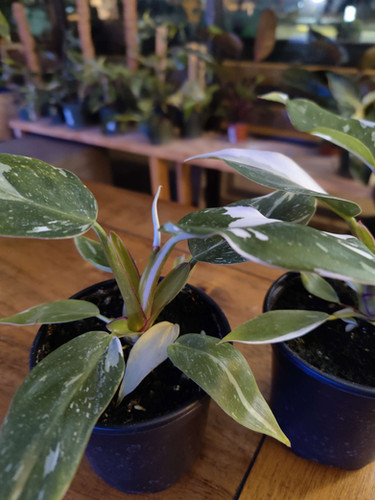
Philodendron White Princess
$25.00
White Princess Philodendron is one of the most striking philodendrons that you can add to your indoor garden. Its gorgeous green leaves are generously splashed with white and will dazzle and delight. As long as you meet the White Princess plant basic care requirements, you should be able to enjoy its beauty for years. *Pet Friendliness - Not Pet Friendly* Potting & Repotting Plan on repotting White Princess plant every 12 or 18 months as it continues to increase in size. You will know when it’s time for White Princess Philodendron repotting when the new leaves become smaller, or roots start growing out through the drainage holes. Don’t be too generous with the new pot size—plants will actually suffer in too big a pot. Only go up a couple of inches in diameter at most. When potting your White Princess Philodendron, use fresh soil, leaving room for the root ball. Loosen the roots gently and firm the soil before watering thoroughly. You may be able to divide your White Princess Philodendron at this point and create two or more separate plants. Pruning White Princess Philodendron pruning is usually just a matter of removing dead or damaged leaves every couple of months. Since it is a slow-growing plant that naturally forms into a tidy shape, it is not necessary to trim it as frequently as the more rambunctious vining tropical plants. When cutting White Princess plant, be careful to use sharp scissors or knife. It’s a good idea to sterilize them with alcohol or flame beforehand to prevent any spread of disease between your plants. Make a clean cut at the base of the leaf stem and discard it in the garbage or compost. Propagation White Princess Philodendron propagation is an easy way to produce more of these lovely tropical plants. Wait a few years until your White Princess Philodendron is big enough to take large enough cuttings from. Younger plants can be divided at the roots. To propagate White Princess plant, start by taking stem cuttings at least 3 inches long with 2 or three nodes and at least one leaf. You can root the cuttings in either water or a light medium such as peat or perlite. Keep them warm and out of the direct sun.

Philodendron Pink Princess
$22.00
A pink, royal, rarity, the Pink Princess Philodendron is a sight to behold. With vibrant pink hues and contrasting dark green leaves, this coveted plant makes a daring statement. It’s fairly uncommon to find in stores but not considered a ‘rare’ plant since it isn’t found naturally in the wild at all. In fact, the Pink Princess is a type of philodendron that has likely been cultivated (man-made) to produce the unique foliage. It’s an upward climbing plant and can grow quite quickly in the right conditions– with each new leaf displaying a completely different splattering of colors. The surprise of new growth makes this plant highly desirable and exciting to watch! *Pet Friendliness - Not Pet Friendly* Light: Like other Philodendrons, the Pink Princess prefers medium to bright levels of light. It’s imperative to provide the plant with indirect light (aka no sun rays) since direct sunlight can burn the leaves. Typically, a location near an east or west facing window will be perfect for this plant. If the plant can “see” the sky, then it’s likely getting enough light. Water Allowing the Pink Princess to dry out partially between waterings is essential for the health of the plant. Specifically, allow the soil to dry about halfway down the pot– simply wiggle a finger into the soil to assess the moisture levels. Once you confirm it’s dry, go ahead and flush the soil with water. Allow water to drain out of the bottom holes of the pot (assuming there are holes!). And never allow the Pink Princess to sit in standing water. Since this plant can be sensitive, over watering can be a death sentence. Also keep in mind that inconsistent watering can lead to physical changes (like blemishes). If your Pink Princess starts to get crispy brown leaf tips or new leaves open with washed out splotches, then it’s likely lacking moisture. Make sure it’s not too dry through the soil to rule out underwatering issues. Then increase the humidity around the plant. You can either use a humidifier or the pebble tray method. Repotting Normal for a philodendron, these plants tolerate a slight level of being root bound– and therefore, don’t need to be repotted often. In fact, we recommend you shy away from repotting unless it’s dire since this plant can be sensitive to changes. If your plant has stunted growth (and you’ve ruled out other potential factors that could have contributed) then it could be time for a repot. This is usually only necessary once every two years. Other circumstances that may make you consider repotting include severe pest infestations and if the soil quality has degraded or is not retaining water. New, fresh, fertile soil can sometimes help plants that are otherwise struggling for no apparent reason. However, when you repot, just remember to only use a pot that’s appropriately sized (that’s 1-2 inches larger in diameter than the previous one). Plus, handling the roots gently will help ensure sustained plant health. More on the ins and outs of repotting here. Extra Info During the active growing seasons (spring and summer), your Pink Princess will need a boost with fertilizer. We typically recommend a monthly dose of a premium, nutrient-rich fertilizer. Since the Pink Princess can be a bit of a princess, there are a few checks and measures to keep her happy. First, she likes higher levels of humidity (~ 50-80%) and a comfortable temperature (65-85°F). You can place her outside (in a shady, but bright spot) during the summer to get some extra humidity. While indoors, you’ll want to make sure Pink Princess is out of contact with vents, heaters, fireplaces, etc– basically the plant will not do well near any source that is drying or blowing air (hot or cold). Issues Despite its beauty, there is only one drawback to the Pink Princess– that is, it does have the ability to revert. In this scenario, the new growth on the plant turns a burnt brown color and fails to produce any pink variegation. If this happens, you can try to trim off the stem where the new growth has reverted. In many cases, the plant will start to regrow with variegation (it is in its DNA after all!).

Philodendron McColley's Finale
$12.00
The Philodendron McColley’s Finale is a rare houseplant known for its gorgeous colors on new leaves that harden into large green shiny leaves. *Pet Friendliness - Not Pet Friendly* Water Water this plant when the soil is dry halfway down the pot. Do not water if the soil is still wet throughout and do not let the soil dry out completely. It can be forgiving but will grow best with consistent water without overwatering. Overly soggy soils can lead to root rot if left unchecked. If you live in a generally humid area, you can consider planting your philodendron in a terracotta pot which wicks away moisture. In dry areas, consider a plastic pot which retains moisture. Light This plant can tolerate a variety of light conditions from bright indirect light to low light. We recommend that it gets about 4-6 hours of bright, indirect to moderate light a day. However, it does not like direct sunlight. Overexposing your Philodendron McColley’s Finale to direct sun may cause leaf burn and discolor its beautiful foliage. It will do best in a north- or east-facing window and can be placed a good distance from the window and still be happy. This is a tropical plant that likes warm climates and high humidity levels. Ideally, you’ll want temperatures between 65-85 degrees Fahrenheit. This plant is not cold tolerant so keep away from vents and drafts that dry out the air. If you notice that the leaves are turning brown on the edges, you can spray with a mist or give it a small humidifier for best results. You can also place a pebble tray filled with water near your plant to encourage more moisture in the air.

Dracaena Marginata Green
$18.00
Dracena Marginata, more commonly known as a dragon tree, is an attractive plant with green sword-like, red-edged leaves. Native to Madagascar, the eye-catching spiky tree is known as a great entry plant for household gardeners—it's easy to care for, drought-tolerant, and nearly indestructible. Thanks to its tolerance for a wide range of temperatures, dragon trees are very popular as large potted plants for homes and offices. They should be planted in well-draining soil and watered regularly during their growing season. Though they can thrive in a variety of light conditions, they do best with indirect bright light. Light Dragon trees grow best in bright light but can also survive in partial shade. Keep in mind, plants kept in lower light situations will grow slower and produce smaller leaves with less intense color. Additionally, take care not to place your dragon tree in a spot that receives direct rays of sunlight—its foliage can burn easily. Soil When growing a dragon tree as a potted plant, use a loose, well-drained potting mix—loamy soil amended with peat moss is ideal. Make sure the container you choose has room for the plant's extensive root system. Some varieties are imported from Hawaii and will arrive with lava rock—if this is the case, remove about one-third of the rock and replace it with potting soil. Water Like with many drought-tolerant plants, it's easy to over-water the dragon tree. To ensure you don't drown it, wait until the top half of the soil is dry before watering (this can often take three weeks or more). If the plant develops brown tips on its leaves, that's usually a sign that it's either receiving too much water or that the water you're using has too much salt or fluoride, which can cause discoloration. To avoid fluoride, water your dragon tree with distilled or non-fluoridated water. If the plant has yellow leaves, it usually means it needs more water. Temperature and Humidity Dragon trees prefer warmer temperatures between 70 and 80 degrees Fahrenheit. Regular household humidity should be fine for them, but if your house is particularly dry, you can consider misting the pant lightly from a spray bottle every few days. Fertilizer Dragon trees have a relatively low need for fertilizer and it is not an essential component to having a thriving plant. However, to boost their growth, you can feed them lightly at the beginning of spring with a balanced controlled-release liquid fertilizer. Do not fertilize in the winter

Philodendron Silver Sword
$10.00
Philodendron hastatum is a vining aroid from Brasil that is cultivated for its silvery gray foliage. This Philodendron loves to climb, and would appreciate a support or moss pole which will allow it to produce larger and more mature, lobed leaves. In nature, this plant climbs up trees to get access to more light, growing aerial roots to attach to the tree. These roots along the vine support the weight of bigger leaves, and absorb moisture to keep the plant happy. To mimic their natural environment in the home, occasionally mist the moss pole so the aerial roots find it easier to attach. PLANT CARE • Light: Bright, indirect light • Water: Water when the top 1-2" of soil feel dry • Considerations: Use a well-draining, chunky soil mix to promote air circulation to roots. Grow this plant up a moss pole for bigger leaves.

Monstera Peru
$22.00
About: Monstera Peru is a very rare fast-growing plant with thick and unusually stiff leaves that is often mistaken for Monstera Pinnatipartita when young because the leaves look alike. The leaves of the Monstera Sp. Peru are somewhat wider, and look rounder, and differ from the leaves of Monstera Pinnatipartita that are more elongated. Monsteras are plants that are not especially difficult for beginners. Make sure your monstera doesn't get more than 30min of direct sunlight, water it often and use well-draining soil so it doesn't become too dense after a few waterings. Boost the Monstera Peru growth by using a totem pole or letting it climb to a surface so it can get bigger and healthier like it does in nature.

Habanero Pepper Tree
$48.00
A habanero plant is a tall-growing pepper plant; the habanero pepper (Capsicum chinense) is one of the hottest pepper plants in the Capsicum family. Once ripe, the peppers usually turn orange and then red, although there are habaneros that, when fully mature, are orange, yellow, white, green, or even deep purple. Habanero peppers are native to Mexico and South America but gained popularity through their use in hot sauces and spices in Mexican cuisine. Habanero pepper plants thrive in hot weather climates where they receive at least one hundred days of full sun. An alkaloid chemical called capsaicin gives hot peppers, including habaneros, their distinctive spicy or hot taste. Two important growing tips for habanero peppers are infrequent but deep watering. Row covers are often necessary with habanero care to avoid sunscald and to keep peppers from drying out and cracking. Fertilize the plants with ¼ tablespoon of nitrogen per plant when habanero plants are at least six weeks old. Apply it as a side dressing 6 inches (15 cm.) from the plants and work it into the soil. Read more at Gardening Know How: Habanero Plant – How To Grow Habanero Pepper https://www.gardeningknowhow.com/edible/vegetables/pepper/growing-habanero-peppers.htm Watch for problems such as insects or blossom rot. Most insects are easy to control with blasts of water to remove them or insecticidal soap. Blossom end rot is caused by calcium deficiency and is minimized by deep watering during the bloom period. Fungal diseases are reduced by limiting overhead watering Read more at Gardening Know How: Habanero Plant – How To Grow Habanero Pepper https://www.gardeningknowhow.com/edible/vegetables/pepper/growing-habanero-peppers.htm

Philodendron Fuzzy Petiole
$18.00
Philodendron sp. 'Fuzzy Petiole' is truly a collector's aroid. It's thought to be a specific form of P. nangaritense, but we're still learning about this plant's place in nomenclature! Native to the rainforests of Ecuador, this aroid has beautiful, slightly velvet, bright green leaves, but it's mainly grown for its odd petioles (the stalk that connects leaf to stem). The petiole is covered in a fine fuzz that becomes more pronounced and vibrantly red on mature specimens. Watering: Water when top 2-3" of soil is dry until water drains from bottom of pot. Do not leave sitting in drainage. Light Requirements: Bright, indirect light. Avoid direct sun to prevent scorching. Humidity Needs: Moderate, over 60%. Can be boosted with pebble trays and/or clustering with other humidity lovers. Lower humidity will likely result in smaller leaves. Soil Preference: Requires a well-draining soil mix that allows water retention but helps prevent root rot. A peat-based soil mix with additional perlite is ideal. Fertilizing: Regularly apply a well-balanced fertilizer during spring/summer months. Repotting: Repot in early spring/summer when soil is too compact or there are exposed roots. Repot a minimum of every 2-3 years to ensure soil nutrients. During a repot is also the perfect time to add support to your climbing philodendron. We recommend a moss pole or trellis to encourage large leaves and rapid growth. Pet Safe: No Common Issues: Overwatering leading to root rot and underwatering are the most common issues for maintaining a healthy Philodendron. Yellowing/discolored leaves = overwatering, brown/crispy leaves = underwatering. Spider mites and mealy bugs are also common pests.

Philodendron Micans
$15.00
Philodendron hederaceum 'Micans' has iridescent, heart-shaped leaves that are velvety to the touch and almost quilted in texture. Depending on the light, the color of the foliage can look deep green or rich purple, with the new leaves emerging chartreuse, edged with pink. Vining in habit, Philodendron 'Micans' will cascade elegantly in a hanging planter, or can be trained to climb up a trellis. If you love interesting foliage, this easy to care for plant is a perfect addition to your collection. PLANT CARE • Light: Medium to bright indirect light • Water: Water when the top 1-2" of soil feel dry • Considerations: Philodendron 'Micans' likes warm temperatures and high humidity; mist periodically
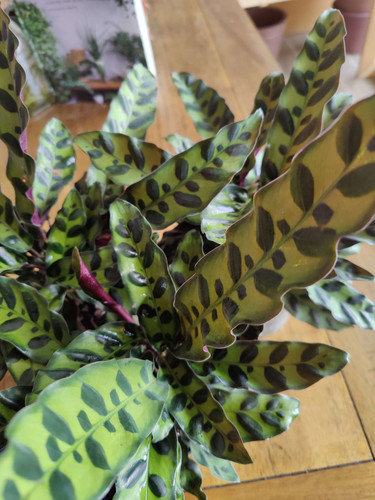
Calathea Lancifolia Rattlesnake
$15.00
Calathea Lancifolia Rattlesnake, plants are not generally considered the best option for a beginner's houseplant collection. They have very particular heat, light, and moisture requirements. However, it can be worth the extra effort when you see the beautiful ornamental leaves the plant produces. Because this plant has large leaves, you may be tempted to use commercial leaf shine to give the foliage an extra boost. This can cause browning of the tips of the leaves, so you should stick with a simple damp cloth to remove any dust or debris instead. Although this plant grows in shaded outdoor landscapes in Hawaii and some southern parts of California and Florida, it is most commonly kept as a houseplant or in greenhouses or terrariums. This tropical native needs a lot of heat and humidity to thrive. Light Filtered light is the best option. If you want to place your rattlesnake plant in a window, select one that doesn't have intense afternoon sun streaming through it, or diffuse the light with drapes. A bright spot in a well-lit room works well. Soil Choose a well-draining soil. Although these plants can't handle standing water, they like to be kept moist. A light sandy soil or a potting mix of two parts peat moss and one part perlite works well. Rattlesnake plant prefers slightly acidic or neutral pH levels, but alkaline soils should be avoided. Water Over the summer, when your rattlesnake plant experiences the most growth, it needs to be watered frequently to keep the soil or potting mix moist. During the winter season, allow the top layer of soil to dry out before watering again. Rattlesnake plants don't tolerate waterlogged conditions; if the leaves start to turn yellow, you may be overwatering. Conversely, if the leaves begin to curl unattractively they aren't receiving enough water. Frequent small waterings are required rather than deep irrigation. Water the plant until it just starts to trickle out of drainage holes (do not water so much that it is streaming out of the bottom). Do not let the plant sit in the excess water. Pour the excess water out and do not pour it back into the plant.

Rhaphidophora Decursiva Dragon Tail
$15.00
About: This unique genus of vining (and climbing) indoor plants brings out your wild side as they are vigorous growers with only a few basic requirements to let them entangle you with green love! Let's set the record straight! These highly acclaimed houseplants are not related to monstera or philodendron, even though there is some resemblance. The most significant difference is that rhaphidophoras need more aeration in their soil and cannot tolerate exposure to cold air like those other plants! Light Provide rhaphidophora decursiva with bright, indirect light. A lack of light will slow down leaf development, and also prohibit the soil from drying out between watering which can cause root rot. Yuck! For ideal light conditions, place your plant in front of a north or east-facing window, or a few feet away from a south or west-facing window. Water During the growing season (spring and summer), keep the soil moist by watering it when the top 1/2 of the soil becomes dry to the touch. Do not over-water. While the Dragon Tail likes moist conditions, it does not like its soil dense and soggy. Water less frequently in the winter. Soil All Dragon Tail love loose, nutrient-rich potting soil. Use a soil medium that can retain moisture but also allows for draining excess water to avoid root rot. Most pre-mixed soils will suffice. Make sure that there is plenty of organic matter, like coco-coir, peat moss, or shredded leaves, and avoid soils that contain moisture retaining crystals. If your soil drains too quickly, we recommend re-potting your Pothos into a compost-rich soil mixture, with less drainage materials. Temperature Rhaphidophora species prefer typical household temperatures (68-80℉). Avoid extremely hot or cold conditions.

Calathea Makoyana Peacock
$15.00
The Calathea Makoyana or Peacock Plant as it is more commonly known is a wonderful plant that can be known to grow up to 2ft in height when cared for correctly. Also named Cathedral Windows. Originally from Brazil this plant is a popular choice around the world for a house plant mainly because it makes a lovely addition to any home due to its beautiful foliage and bold markings. Light Requirements: Bright, indirect light. Avoid direct sunlight. Watering: Maintain moist soil. Water once the surface of the soil starts to dry. Soil: Well-draining general-purpose houseplant potting mix. Temperature: 60-75°F (16-24°C) for best growth. Fertilizer: Use liquid or water soluble fertilizer made up at no more than half strength and apply every 2-4 weeks during the growing season. NPK 3-1-2 is perfect, but a balanced preparation is normally fine. Humidity: >60% humidity. High humidity is really important to keep your peacock plant healthy. Using a digital hygrometer to monitor humidity is a great idea. Pruning: Remove old leaves and pinch back to maintain compact growth. Propagation: Propagate by division in the spring or summer. Re-Potting: Repot every 1-2 years at the start of the growing season. Diseases and Pests: Generally quite resistant. Will get root rot if overwatered. Aphids, spider mites and scale sometimes. Toxicity: Non-toxic. Safe for humans and pets.

Syngonium Cream Allusion
$12.00
Syngonium podophyllum (nephthytis) or the Goosefoot Plant is a simple but elegant and versatile houseplant. It can be grown easily as a compact bushy looking plant, or you can accept its creeping, climbing nature and grow it tall up a moss stick. It also plays well if you want to grow several different types of house plants together in a large container. Arrowhead leaf color varieties vary from dark green to highly variegated dark and light green, but the leaf of each arrowhead variety will always have that interesting arrow shape. You can keep the arrowhead plant pruned so it only has juvenile leaves, or you can allow it to mature and climb up a trellis or support sticks. Syngonium podophyllum 'Cream Allusion' is an especially compact variety, it has medium-sized leaves that are creamy-green in color and infused with pink. WATERING Keep the potting mix moist in summer, allowing the surface to dry out before watering again. Water less often in winter, letting the top half of the potting mix dry out. LIGHT Bright light, but no direct sun. The cream allusion plant is a great container plant for shady balcony gardens that don t get much direct sunlight. If you have a southern exposure with bright light, it will do better in an indoor garden. It tolerate low light, but the leaves may lose their variegation. Turn pot regularly for even growth. POTTING MIX Any good potting mix. Use a container with good drainage. FERTILIZER Feed every 2 weeks from except in winters with a balanced house plant fertilizer diluted to half the normal strength. In winter, feed monthly.

Philodendron Silver Stripe
$15.00
Philodendron Hederaceum Silver Stripe is a rare houseplant from the Hederaceum plant family. The most iconic feature of this plant is the long heart shaped leaves with unique white and cream splash streak running down the middle of the leaves. This trailing plant carry similar characteristics of the Philodendron Cream Splash and Philodendron Rio. Watering Water every 4 - 7 days when top 3 of soil is dry. LighT Medium indirect sunlight or under grow lights. Temperature 65°F - 75°F Soil Mix Well drained Potting Soil, Peat Moss, Perlite, Orchid Bark Humidity Keep humidity high at 65 - 75% Fertilizer Every 4 weeks in summer and every 12 weeks in winter

Fiddle Leaf Fig Tree
$25.00
About: 8" Pot The Fiddle Leaf Fig is easily recognizable and loved for its distinctive foliage. This tall, dramatic plant has very large, heavily veined, violin-shaped leaves that grow upright. It’s not bushy, making it a beautiful interior design addition for a brightly lit corner or cozy nook in your home. Native to the tropic climate of Western Africa, the Fiddle Leaf Fig thrives in very warm, bright, and humid conditions. This can make them somewhat challenging to grow indoors, but luckily they are relatively tough and can withstand less than perfect conditions. Location: Choose a room that’s big and bright, like a great room, sun room, large foyer, or atrium. This indoor tree needs plenty of elbow and ceiling room to accommodate its eventual size and to show off the spectacular leaves. Light:Locate near an east or south-facing window with bright indirect or brightly filtered light. Avoid direct sunlight, which can burn the leaves. Temperature:Fiddle leaf is very sensitive to temperature fluctuations, so place it in a warm room (60° to 85° F) away from drafts and heating and air conditioning vents. Do not buy your plant in the winter (or anytime the outdoor temperature dips below 50° F), so it won’t be exposed to the cold when bringing it home. Humidity:The best gift you can give your fiddle-leaf is a humidifier because it prefers jungle-like, above-average moisture levels. If the air in your home is dry, mist the leaves occasionally or place a small humidifier nearby. Soil:Use a good all-purpose potting mix that drains well. Watering:From spring to fall, water when the top inch of the soil feels dry; water more sparingly during winter. Fertilizing:Fertilize during the active growing season (spring through fall) with a high-nitrogen foliage plant food that includes micronutrients.

Anthurium Clarinervium
$45.00
About: Anthurium clarinervium is one of the Instagram must-have houseplants right now, so count yourself lucky if you are able to find one available to buy at a reasonable price. Also known as velvet cardboard anthurium or white-veined anthurium, its brilliantly patterned lush leaves will enhance the contemporary or traditional decor. There are many types of anthurium that can grow very large indoors. Clarinervium is a small breed that is perfect for growing indoors. indoors, clarinervium can only grow 6'' and can be a bit bigger Lighting Clarinervium loves bright light but not direct exposure. maybe you should keep it out of direct light, a little bit is ok. but unless you live in an area where the days are shorter and cloudy, the sun's rays are very beneficial. I put my plants in the window that gets the morning sun, but in summer, I place them outside in the shade under a big tree. TEMPERATURE Anthurium will thrive in warm temperatures. provide him with around 70-90F (21-32C) if you can. I keep mine in my sunroom and it goes into the 60s (F) in winter, sometimes lower HUMIDITY Anthurium really likes humidity so it is suitable for planting in a greenhouse, but it can also be planted indoors but you have to be a little extra careful If your room is dry due to winter, I recommend having a humidifier in your home. I run it from around October or when winter comes, until April or May. feed them with humidity around 40% or can be more at least 50%-60% I used to use a humidifier in winter without stopping IRRIGATION this plant is like an orchid, it sticks to the tree and it often rains in nature, they are often exposed to rain but dry quickly This is what you must apply at home. Don't let this plant stagnate in water, it can kill it. after you water the anthurium, make sure you drain the water perfectly, so that no water gets caught in your plant and makes it dry quickly do not water too often maybe every 3 days depending on the season. besides having a good way of watering, you also have to have a good planting medium so that your anthurium thrives Soil Since anthuriums are epiphytes, they need well-draining soil. I used to add orchid skin, this is the secret of growing anthurium you can start with 1 to 2-3 potting soil. this will provide high drainage for them to thrive you can also mix a handful of pearlite into it. Equal parts potting mix, perlite and orchid bark make this an excellent medium. This is the mix I'm currently using. Fertilization Fertilizer is active in Spring and Summer. The fertilizer I use is Dyna-Gro Grow and bought it in the marketplace. I add 1/4 teaspoon to a gallon of water and put it on a tropical plant. It is a FULL fertilizer and is urea free so it is not able to burn plants. I always use this fertilizer and recommend it to you, because I get very good results AIR CIRCULATION Since these are epiphytes, they love air, please consider this. in nature they have good circulation because they grow on the edge of cliffs attached to trees and rocks. Air circulation is very favored by many plants, especially epiphytes such as Anthurium. I'm not discussing cold wind, surely you will avoid it. If it's warm outside, open the window so that the air circulates smoothly to your plants. putting it outside in the summer will provide good benefits because it will get rainwater, humidity, and good air circulation Propagation Propagation should be done while you are repotting, if your Anthurium has more than one stem. separate each new establishment. make sure there are 1-2 roots in the part you are going to multiply
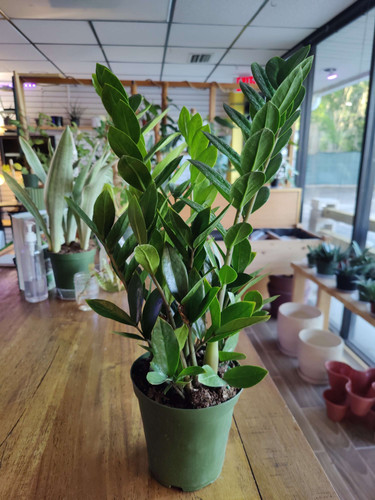
Zamioculcas Zamifolia
$15.00
The Zamioculcas zamifolia, or ZZ Plant, is a tropical perennial native to Eastern Africa. It has become popular worldwide in recent years due to its tolerance of a wide range of conditions—a highly dependable houseplant, it can tolerate low light and has low water requirements. Sometimes nicknamed the “Zanzibar Gem,” the ZZ grows smooth, naturally shiny leaflets that range from bright lime in their youth to an emerald green in their maturity. Individual leaflets are typically one to three inches long and spring from thick, slightly bulbous stalks, which grow from large, water-storing rhizomes hidden underneath the soil. The plant is fairly drought tolerant and can survive months without water, so infrequent watering and letting the soil dry out fully is no problem. On the other hand, heavy constant watering without allowing the soil to dry out in between will turn the leaves yellow before rotting the tubers away. Drainage holes in the growing container is therefore recommended to help let excess water drain away. Temperature The Zamioculcas is a very easy to care for plant as it thrives in lower and higher temperatures. It is advisable to maintain a minimum temperature of 12 degrees Celsius during the day and a minimum temperature of 5 degrees Celsius at night. Pruning The yellow leaves are best removed. This also ensures that the ornamental value is maintained and saves the plant energy. The yellow leaves can also indicate that you give the plant too much water, check this by giving less water for a while when there are many yellow leaves. These leaves can easily be cut off close to the stem. Wash your hands after pruning, because the plant is still slightly poisonous. Repotting It is possible to repot the plant immediately upon purchase. Do this in the spring, so that the plant still has enough time to recover from any damage. It is advisable to take a pot that is at least 20% wider than the growing pot. After about 3 years, repot the plant again in the spring. Use normal potting soil and it is not recommended to use hydro grains for filling. The hydro grains can cause it to rot. Nutrition Extra feeding in spring and summer is important for the Zamioculcas, as it is a fast growing plant. This is especially true when the plant is in the light. Then feed once every 2 weeks and when the plant is in the shade this can be reduced to once a month as the plant will grow less quickly. Never feed more than the indicated dosage, this can cause burning of the roots. Watering The Zamioculcas does not need much water. The plant has excellent stamina and therefore does not mind being dry once. The soil can even be dry for 3 to 4 weeks. So give more water less than too much, because that will cause yellow leaves. In winter, the plant can easily survive 6 to 7 weeks without water

Moss Pole (Various Sizes)
$6.00
About: What are the benefits of staking your plants? Many tropical houseplants, including Monstera, Philodendron, Pothos, and Scindapsus are considered epiphytes. This means that in their natural outdoor habitat they grow on other plants as a means of support to reach the brightly lit tree canopy. Moss poles mimic the texture of moist, mossy bark and provide physical support for your plants to grow aerial roots and climb upward. Moss poles also offer a way to train widely growing plants into an upright narrow form to fit better in small spaces. - You have more flexibility on where you can put your plant - Your plant takes in less space (space for more plants!) - You can "shape" your plant - You like the way it makes your plant look.

Anthurium Red Leaf
$15.00
Red Leaf Anthurium is a tropical epiphytic perennial that is commonly used as a gift or house plant. Its drooping heart shaped foliage that emerges a beautiful red before maturing to deep green is supported on long upright stems. The flower stalks sport incredibly long lasting flowers that come in a variety of colors. The plant may bloom year round in optimal conditions. Grows best with bright indirect sun and consistently moist well-drained soils. Do not place in direct sun. Flowering - This plant can produce flowers Sun - Bright, Indirect. Place in an area with filtered light, away from direct sun Humidity - High Humidity Mist often to keep this plant happy Water - Moderate Watering Allow 1-2 inches of the soil to dry.
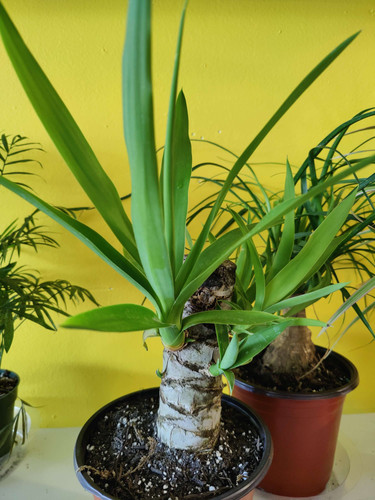
Yucca
$12.00
Yucca plants do best in a partly shaded location that receives bright, indirect light. Although yucca plants may grow in sunnier spots, their appearance could suffer from brown tips or white spots on their leaves. Giving your yucca plant the right kind of soil is somewhat of a balancing act. Yuccas do not need high quality soil, but it needs to be well-draining. However, it still needs to be heavy enough to hold the plant upright. Yucca plant soil should also retain water well. Try a 3:1 mixture of sand and peat in your container. Yucca plants prefer to be on the dry side and are considered drought-tolerant plants, which makes sense given their desert origins. In general, allow about the top half of the soil to become dry before watering. More specific watering requirements will depend on how much light your yucca plant receives. In lower light conditions, water your plant less; in brighter light conditions, water your plant a bit more. Propagating your yucca plant can be done in two main ways: through division or through pups. Propagation is best done in fall. To propagate by division, separate the rhizomes beneath the soil and plant your new yucca plant in appropriate soil and place in a sunny location. Keep the plant lightly moist until roots are established. Yucca plants are quite pest-resistant, another way that these plants are low-maintenance. Spider mites do not like yuccas.

Calathea Elgergrass
$15.00
The striking Calathea 'Elgergrass' are wonder plants, their leaves spread open in the morning to catch the light, and in the evening they close in an upwards motion. If you listen out, you may hear the leaves rustling throughout the day. Calathea rufibarba 'Elgergrass' is also an amazing air-purifier, which means it filters pollutants in the air and expels fresh oxygen! Colour has a great impact on our feelings and emotions. The purple in the Calathea Rufibarba is perceived as spiritual and intriguing. Pet friendly! Also known as Velvet Calathea and Fuzzy Feathers due to its fuzzy underside, it has unique dark green slim leaves with purple underneath. When the plant is young, its leaves are light green and as it matures they darken. Native from tropical Americas, especially the Brazilian Amazon rainforests. Plants help us feel grounded. Having them in your bedroom can help improving sleep quality. As you touch its fuzzy feathers, you engage with the plant. Taking care of plants helps us improve how we look after ourselves.

Calathea Concina Freddie
$15.00
This Prayer Plant will grab your attention. It's hard to look away once you set your eyes on it because it has a way of changing its color over time, evolving from vibrant magenta to rich purple, depending on the light it receives. The large foliage and its dense form make Calathea Freddie worth providing the extra humidity it needs to flourish. Light Calathea Freddie can handle low light, but increased light can help maintain the vivid colors and patterns on the foliage. Aim to have your Calathea Freddie receive 4-6 hours of indirect sunlight daily as this will help it develop into a full and dense plant! Direct sunlight is damaging to the leaves and may cause them to burn. Water Calathea concinna needs to be consistently watered. Thoroughly water these indoor plants when the top inch of the soil is dry letting the soil partially dry out before you water it again. Calathea Freddie houseplants do best in well-draining soil and in containers with drainage.

Calathea Medallion
$15.00
Calathea Medallion can easily become your favorite houseplant. It’s a low-light plant from the tropics in Brazil. It has green patterns on top of the medallion leaves. Underneath, you notice a burgundy shade revealed at night as it folds up. LIGHT Your Calathea Medallion will do best in medium to bright indirect light, but will tolerate lower light situations. Never allow this plant to stand in the direct sunlight—the leaves will get sunburned! WATER Water your Calathea when the top 25% of soil is dry. Water until liquid flows through the drainage hole at the bottom of the pot and discard any water that has accumulated in the saucer. HUMIDITY Like many tropical indoor plants, your Calathea Medallion prefers a spot with ample humidity. If leaf edges begin to curl or brown up, mist them with lukewarm water on a regular basis, use a pebble tray, or place a humidifier nearby. Your bathroom or kitchen are perfect spots for this plant because these areas tend to be more humid. TEMPERATURE Your Calathea Medallion enjoys warmth, preferably between 65-85 degrees, so maintain indoor temperatures above 60 degrees. Avoid cold drafts and sudden temperature changes. FOOD For best results, use a general houseplant fertilizer with iron every four weeks during the spring and summer. No fertilizer is necessary for the winter when plant growth naturally slows. TOXICITY Calatheas are non-poisonous plants and are safe for humans, cats, and dogs.

String of Dolphins
$15.00
About; Spider plant succulent soil - The first and the top String of Dolphin’s care rule is that you need to plant in a well-draining potting or soil mix. The best is to order a typical succulent sandy soil mix for dolphin plant pots and gardens. Ensure that the pot is of an appropriate size and has well-defined holes at the bottom for water drainage. The soil mix ratio for potting soil and sand is 3:1. Alternatively, you can add 15% perlite, 35% organic manure, 35% river sand, and 15% cocopeat. Fertilizer - Your dolphin succulent plant can survive without regular fertilizers. However, it is advisable to fertilize them at least once annually, at the beginning of the blooming season, that is spring. Take care not to over-fertilize the soil as it can result in the dancing dolphin plant losing its cute iconic shape. Watering - Your succulent String of Dolphins needs to be watered no more than once or twice a week during the hot season, even if the plant is drought-tolerant. When the weather is colder, ensure that you water the plant only once or twice every month. The water needs to be in the correct quantity for the dolphin tail plant to thrive. If the water stands at the plant's roots, they will start to rot, and in no time, you will find the String of Dolphins drying up. Dolphin outdoor light - The other important aspect of the strings of dolphin plant care is the sunlight. The plant loves bright natural light but ensures that it is indirect. For an indoor window plant succulent, you need to place it near a south-facing window. Also, remember, the dolphin-shaped succulent can tolerate lower temperatures - almost as common as 4°C. These are, however, not frost-tolerant plants. Repotting String of Dolphins - The succulent should be repotted once every few years for nutrient-rich soil. Each time goes in for a pot one size larger than the current one. You can read dolphin pots reviews for best buy.

String of Turtles
$15.00
String of Turtles (Peperomia prostrata) is a type of succulent native to Brazilian rainforests that thrives in warm climates but adapts well to average household conditions. Because of this, it's a popular plant for houseplant collections and apartment jungles worldwide. That same leaf shape is what gives the plant its common name. Each one looks like the shell of a miniature turtle strung together. Every tiny leaf on its trailing vine has intricate multi-colored patterns covering its surface—the colors become muted with age and eventually become bicolored by maturity, typically a darker green contrasted by light green. No matter how it is used, the uniqueness of Peperomia prostrata will make it a valuable addition to any indoor plant collection and an excellent conversation piece. LIGHT Place your Peperomia in low to indirect light. Too little light can cause slow growth while too much light can burn the foliage. WATER Water your Peperomia when 50%-75% of the soil volume is dry. Water until liquid flows through the drainage hole at the bottom of the pot and discard any water that has accumulated in the saucer. HUMIDITY Peperomias will tolerate average household humidity. However, like most tropical plants, they will benefit from added humidity. You can add humidity by placing a humidifier nearby, misting often, or using a pebble tray. TEMPERATURE Peperomias prefers average room temperatures between 65-75°F. FOOD Your Peperomia will benefit from regular fertilizing during the growing season. Feed once per month in the spring and summer months with general houseplant fertilizer diluted to half the recommended strength. TOXICITY Peperomias are non-toxic to humans and pets. ADDITIONAL CARE Trailing peperomias can be easily propagated. If you want to multiply your plants or share with a friend, make a cut on a vine below a leaf node, and stick the stem into the water. The plant should respond by sending new shoots from the cut node. Roots will begin to develop after a few weeks. Once roots develop, transfer to soil and keep moist.

String of Hearts
$15.00
With simply gorgeous heart-shaped, patterned leaves, the string of hearts plant has stolen our hearts and are not just for Valentine’s day any day of the year. Originally from South Africa Other names Ceropegia woodii Rosary Vine Watering The string of hearts is a semi-succulent plant, which means it is more tolerant of dry soil than wet soil and is prone to rotting in wet soil. You should water it sparingly, if in doubt. You can always add more water. You can confidently allow the soil to dry out completely between waterings. This plant goes dormant in Autumn and Winter and therefore needs less watering. The soil should be lightly moist in spring and summer. Light conditions required Keep your string of hearts in bright light, with some direct sun (but not all day) for the best colour and plenty of leaves. If you notice large spaces between leaves, the chances are the plant is not getting enough light. Temperature and humidity This is a plant that enjoys 40-50% humidity. Flowering The main attraction of this plant is the beautifully-shaped leaves and the gorgeous pattern on its trailing leaves, but it does also produce small purple flowers in the spring/summer. Propagation As your string of hearts grows, you might notice little bead-like nodules on the vines. These appear after the plant has flowered. If these nodules touch the soil, the nodule will send down roots into the soil and another new plant will form. So you can drape the nodules over the surface of the pot, or cut the vines by the nodules and place the vine with the nodule on the surface of the soil to encourage it to grow another plant in the same pot – or even share cuttings with your friends.

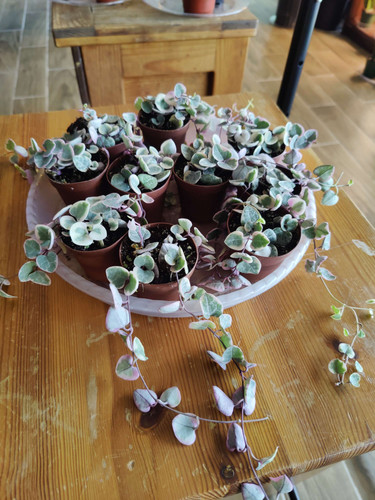
String of Hearts (Variegated)
$12.00
About: With simply gorgeous heart-shaped, patterned leaves, the string of hearts plant has stolen our hearts. These aren't not just for Valentine’s day any day of the year. Originally from South Africa Other names Ceropegia woodii Rosary Vine Watering The string of hearts is a semi-succulent plant, which means it is more tolerant of dry soil than wet soil and is prone to rotting in wet soil. You should water it sparingly, if in doubt. You can always add more water. You can confidently allow the soil to dry out completely between waterings. This plant goes dormant in Autumn and Winter and therefore needs less watering. The soil should be lightly moist in spring and summer. Light conditions required Keep your string of hearts in bright light, with some direct sun (but not all day) for the best colour and plenty of leaves. If you notice large spaces between leaves, the chances are the plant is not getting enough light. Flowering The main attraction of this plant is the beautifully-shaped leaves and the gorgeous pattern on its trailing leaves, but it does also produce small purple flowers in the spring/summer.
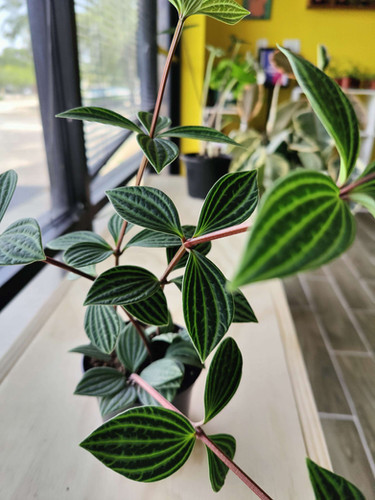
Peperomia Stilt
$15.00
Peperomia Stilt can be hard to find and is known for its upright growing pattern. It features beautiful yellow and green striped foliage and is a great plant to add to or start your peperomia collection with! Recommendations for growing success: Light: Bright indirect light Water: Let soil dry out between waterings Repotting: Repot as cuttings

Peperomia Ecuador
$12.00
Peperomia Ecuador have a very unique foliage which looks and feels like rubber. They love to reach every which way for light while they bush out and do great in both table planters and hanging baskets. Most Peperomia are very easy to care for and make great plants for beginners. Watering Water every 3 - 5 days when top 2" of soil is dry. Keep soil moist but not soaking wet. Light Medium indirect sunlight or 6-8 hours under grow lights. Temperature 65°F - 75°F Soil Mix Well drained Potting Soil, Peat Moss, Perlite, Orchid Bark Humidity Keep humidity high at 65 - 75% Fertilizer Every 4 weeks in summer and every 12 weeks in winter
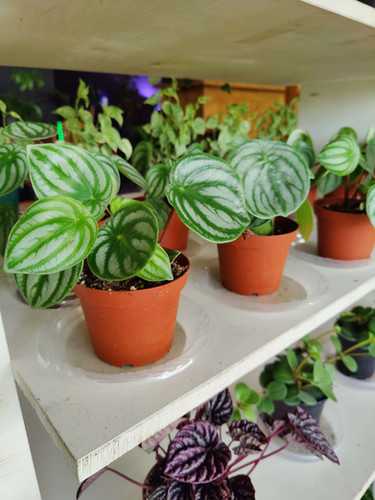
Peperomia Watermelon
$15.00
Overall watermelon peperomia are easy to care for and grow as houseplants, especially if you are good at staying on top of watering your plants. If you have a habit of forgetting to water your plants for weeks at a time, this plant might not be for you as peperomia are moisture-loving plants. While they do produce flower spikes in the spring and summer, the blooms are insignificant. Some growers choose to cut the blooms off so that the plant can focus its energy on producing foliage, which produces much more visual interest. LIGHT Place your peperomia in low to indirect light. Too little light can cause slow growth while too much light can burn the foliage. WATER Water your peperomia when 50%-75% of the soil volume is dry. Water until liquid flows through the drainage hole at the bottom of the pot and discard any water that has accumulated in the saucer. HUMIDITY Your peperomia does well in average household humidity. However, if the air is very dry it will appreciate the occasional humidity boost. TEMPERATURE Peperomias prefers average room temperatures between 65-75°F. FOOD Your peperomia will benefit from regular fertilizing during the growing season. Feed once per month in the spring and summer months with general houseplant fertilizer diluted to half the recommended strength. TOXICITY The Watermelon Peperomia is non-toxic to pets and humans if ingested. ADDITIONAL CARE Your Peperomia Watermelon can be easily propagated through leaf cuttings. To propagate, cut a stem near the soil line and stick the stem into clean water. Roots will develop after a few weeks. Once roots develop, transfer to soil and keep moist until established.

Peperomia Cupid
$12.00
The Peperomia Cupid is also known as Peperomia scandens ‘Variegata,’ comes with heart-shaped leaves that are very aesthetically pleasing and can be a great addition to your space. The Peperomia Cupid is native to tropical regions such as the Caribbean, Mexico, and Central America. These plants usually cling to other large trees, which is why they look so delicate. But despite their delicate appearance, these plants are very resilient, and you do not have to be extra careful when caring for them. LIGHT Place your Peperomia Cupid in low to indirect light. Too little light can cause slow growth while too much light can burn the foliage. WATER Water your Peperomia when 50%-75% of the soil volume is dry. Water until liquid flows through the drainage hole at the bottom of the pot and discard any water that has accumulated in the saucer. HUMIDITY Peperomias will tolerate average household humidity. However, like most tropical plants, they will benefit from added humidity. You can add humidity by placing a humidifier nearby, misting often, or using a pebble tray. TEMPERATURE Peperomias prefers average room temperatures between 65-75°F. FOOD Your Peperomia will benefit from regular fertilizing during the growing season. Feed once per month in the spring and summer months with general houseplant fertilizer diluted to half the recommended strength. TOXICITY Peperomias are non-toxic to humans and pets. ADDITIONAL CARE Trailing peperomias can be easily propagated. If you want to multiply your plants or share with a friend, make a cut on a vine below a leaf node, and stick the stem into the water. The plant should respond by sending new shoots from the cut node. Roots will begin to develop after a few weeks. Once roots develop, transfer to soil and keep moist.

Peperomia Hope
$12.00
- Low Maintenance Rare Plant - Light Preference/Tolerated (Bright Indirect Light, Medium Light, Low Light) - Average Watering Needs - Mature Height 11-18 inches - Pet Safe Hope Peperomia is an epiphytic succulent with thick clusters of leaves attached to vining stems. Hope is a low-maintenance plant, perfect for first-time growers. It will tolerate a bit of neglect without a decline in vigor. Humidity does not have to be high; this plant will adapt to lower light levels. Best Locations For Growing Any bright but diffused light in the house is suitable to grow Hope Peperomia. This plant looks beautiful on its own atop a desk or shelf but thrives amongst other plants where the humidity will be higher. No parts of Hope Peperomia are not known to be toxic to children or pets. Sunlight Requirements Indirect bright light is preferred. Near a southern-exposure window with light-filtering curtains is ideal. Grow lights can be used during the winter when the light levels may be lower. Care Pot Hope Peperomia in potting soil with a lot of perlite and orchid bark mixed in. This gives the soil excellent drainage. Use a container with drainage holes at the bottom and do not let the pot sit in a saucer of water longer than 10-20 minutes. From time to time, a flower stem may develop and unfurl. The flowers are not decorative; this stem can be cut back to encourage more foliage growth on the plant or left to grow. Repot Hope Peperomia when roots begin to appear at the top or bottom of the pot. Watering Watering Peperomia should be done on a schedule until you figure out how the humidity levels in your house affect water evaporation in the soil. Once a week, check to see if the top 2-3 inches of soil have dried. This is when watering is needed. Soak the pot and let the excess water drain into the saucer. Discard any sitting water in the saucer after 10-20 minutes. Feeding Fertilizing can be done once every 1-2 months. Use a liquid houseplant fertilizer diluted to half the recommended strength. Apply the food in place of a watering. Using worm castings as a top-dressing for the container will also provide nutrients to the plant.

Peperomia Rana Verde
$15.00
Peperomia albovittata 'Rana Verde' is a hybrid that was produced by crossing different cultivars of Peperomia albovittata. Its rippled leaves are heart shaped and emerald green. This is an easy to care for houseplant, but will do best with a little extra humidity. Care of Peperomia albovittata 'Rana Verde': Shade to partial shade, temp. 50 to 95 degrees, 4 to 6 in. tall. Allow to get fairly dry between waterings.

Peperomia Polybotrya Raindrop
$12.00
Peperomia polybotrya, also known as Coin-Leaf Peperomia or Raindrop Peperomia, is a delightful addition to your houseplant collection. The glossy green, thick, heart-shaped leaves are beautiful and the plant remains pretty compact so it is great for smaller spaces! SOIL: Since this plant stores water well it is best to use a fast draining soil mixture. African Violet soil is a great option, which you can easily find at stores even though I know that sounds really specific. If you want to make your own mix, use 50% perlite and 50% peat moss. TEMPERATURE: The ideal temperature for this plant is 65-80 degrees Fahrenheit which is pretty easy considering most houses stay in that range. She will put up with higher temperatures in summer but if that is the case then keep her in more shaded conditions. Avoid drafty windows and AC units. LIGHT: There are a few options for placement when it comes to the Raindrop Peperomia. Avoid placement in direct sun as it can burn the leaves. Directly in the north facing windows will do as the light is not strong. East and west facing windows you can place it close to the window. West light can be really hot so keep an eye out for burning and shift it a little farther away if need be. Southern light is extremely strong so place it at least a few feet away from the window. Mine is about 6 feet from a southern window. If you live in a very dim place you can always look into grow lights. If your plant is not getting enough light it will start stretching toward the light and become leggy. Shift it closer to a window and if its looks are bothering you, you can prune it. HUMIDITY: While misting isn't essential for Raindrop Peperomia to grow, it will be grateful. It helps recreate the hiumid environemnt its from and it prefers clean leaves. WATER: As I explained earlier, the leaves store water so overwatering is a big no. Let the soil dry before watering again. If you are unsure, stick your finger in the soil and make sure the top 1-2 inches are dry. During the spring and summer I water mine once a week. In the winter I reduce watering to every 10 days. Water thoroughly until its running out the bottom of the pot, make sure to dump the tray out so there is no standing water though. Signs of overwatering are: rotting stalks, yellowing or wilting leaves, water logged soil. FERTILIZER: Once a month during the growing season fertilize your Peperomia. In winters you should not fertilize.

Peperomia Ripple Ruby
$12.00
Ripple peperomia plants grow to about 8 inches tall and wide. This small size makes these plants suitable as office plants and houseplants. They enjoy bright but not direct sunlight, so north- or east-facing windows work well. But peperomia also grows well under fluorescent lights. The Leaf colors become brighter and more pronounced when the plants receive more light, but direct sunlight can burn the plant. Peperomia requires porous, well-drained soil to avoid root rot. Peperomia like slightly dry soil, so let the surface soil dry before watering. Increase the humidity for the plant by placing a saucer of pebbles and water under the plant. Place the pot on pebbles to avoid oversaturating the soil and mist the plants during the hot months. Fertilize about once a month during the growing season and reduce water in winter. Rot from excess water and cold temperatures are bigger problems for peperomia than insects or disease.


Philodendron Brandtianum
$22.00
Silver leaf philodendrons (Philodendron brandtianum) are attractive, tropical plants with olive green leaves splashed with silvery markings. They tend to be bushier than most philodendrons. Although Philodendron brandtianum works well as a hanging plant, you can also train it to climb up a trellis or other support. As an added benefit, silver leaf philodendrons help remove pollutants from indoor air. Read more at Gardening Know How: Philodendron Brandtianum Care – Growing Silver Leaf Philodendrons https://www.gardeningknowhow.com/houseplants/philodendron/growing-silver-leaf-philodendrons.htm Light Philodendron brandtianum grows best with bright, indirect light. Keep in mind that in the plant’s native tropical environment, it receives frequent and abundant sunshine but is protected from direct sun by the canopy of foliage that naturally grows above and around the plant. Mimic these conditions by choosing a sunny spot in the room, but avoid a windowsill with direct sun, which is too harsh for this plant. Soil Well-draining soil is essential for Philodendron brandtianum. If you choose to pot this plant using standard potting soil mix, it may be best to amend the soil using a 3:1 ratio with perlite or coir. In addition, pick a nutrient-rich potting soil mix or add compost to ensure that the soil is rich enough to support the plant’s moderately fast growth rate. The pH level of the soil should hover between neutral and slightly acidic. Water Philodendron brandtianum should be watered deeply and regularly, with the frequency depending on the specific environment. The best approach is to water the plant when the top few inches of soil feel dry; this may be as often as every other day during or as infrequent as once per week. Aside from dry soil, drooping or curling leaves are an indication that the plant needs more moisture. Be sure to avoid watering the leaves, as doing so can lead to fungal growth
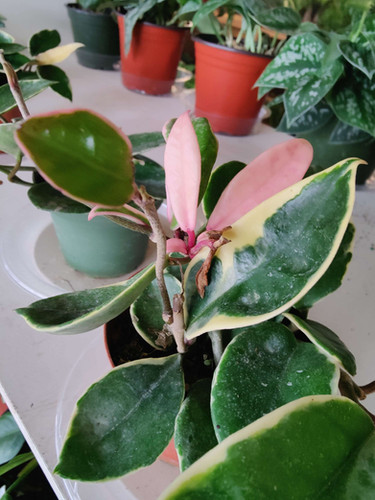
Hoya Krimson Queen
$15.00
Hoyas are native to Asia and Australia and were cultivated more than 200 years ago. A variant of Hoya Carnosa, orm Krimson Queen, was first coined as The Hoya TriColor as its waxy leaves sport variegation which can range from bright pink to white. Home Placement: When grown inside, Hoya Krimson Queen will do well in a south or west-facing window. This houseplant enjoys bright light that is mostly indirect. Growth Speed: Hoyas are relatively fast-growing, though not as fast as other vine plants. The Krimson Queen’s vines usually grow more quickly than other Hoya variations. Light Requirements: This Hoya enjoys bright, indirect light. However, a little direct sunlight can be a good thing – especially when it comes in the spring and winter. This can encourage flowering and bring out the pink color in the Krimson Queen. However, be cautious of bright direct light on warm summer days, as the Hoya leaves will scorch. Watering Requirements: Hoyas store water in their lush, succulent-like leaves. So, like succulents, they are somewhat drought tolerant. Leaving them unattended over your vacation shouldn’t keep it from thriving. Water 1-3 times per week, allowing the soil to dry completely between.

Hoya Pubicalyx Silver Splash
$12.00
Hoya Pubicalyx is native to the Philippines, and it was first collected in Luzon Island in 1913. In nature, this Hoya is found in humid regions and thrives under the canopy of trees under indirect bright sunlight. How to Care for your Hoya Pubicalyx Light In its natural habitat, the Hoya Pubicalyx grows under the canopy of trees. This is why bright indirect sunlight is essential for its growth. East-facing windowsills are an excellent choice, as this gives your plant some exposure to morning sun and indirect light for the rest of the day. Exposure to morning sun (which is less harsh) is fine and encourages your Hoya’s foliage to grow vibrant. On the other hand, keeping the plant under direct sunlight during afternoon and midday sun can burn it. You can use a 20-40% shade cloth to filter harsh light. Water Hoya Pubicalyx is a relatively drought-resistant plant but still requires watering regularly. The ideal time to water is when the top 2 inches of the soil are dry. Overwatering this plant can lead the roots to remain in standing water and increase the chances of fungal infections and root rot. Filtered water and rainwater are best suited for plant health as hard water can be detrimental and leave water marks on the leaves. Make sure to remove the excess water from the saucer when you’re done watering. Humidity Being a tropical plant, one thing that your plant loves is humidity! 60-70% humidity is ideal, but it can also be hard to maintain in some climates. Regular misting, using a humidifier, or placing your plant on a pebble tray are some ways you can create humidity for your plant. Again, it is better to use filtered or rainwater as it is good for the plant and prevents water spots from forming on the leaves. Temperature The tropical regions where Hoya Pubicalyx is naturally found are hot and humid. Therefore, the ideal temperature range for this plant is about 60-75 degrees F (16 – 24 degrees C). Furthermore, you must ensure that the temperature doesn’t drop below 50 degrees F (10 degrees C) in winter. Shift your plant to warmer areas when things get chilly. Your plant is not cold-hardy. Growth Hoya Pubicalyx is a fast-growing plant, and its vines can grow up to 20 feet (6 meters) long, given that all its nutritional needs are being met. New plants can take 1-2 years before they start blooming, and after that, they bloom in spring and summer. The flowers are star-shaped, small in size, and grow in clusters. As we already discussed, there are a variety of cultivars that produce different color variations. The flowers emit a sweet fragrance at night.
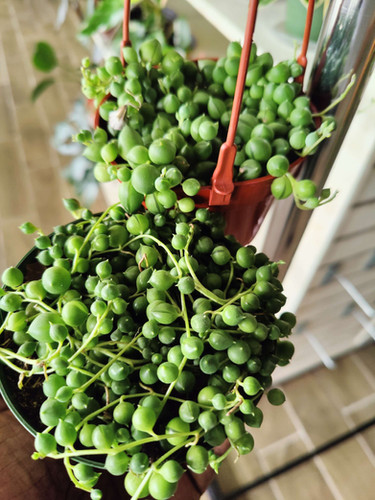
String of Pearls
$15.00
What is a String of Pearls Plant? The String of Pearls plant is an extremely unique looking succulent, drawing many fans who love it not only for its look but also for its ease of care! The bubble or pearl-like leaves look striking draping down over a basket or from the top of a bookshelf. Just like other succulents, there are some tricks to make sure these plants survive happily, but with a bit of knowledge under your belt, you can easily help this plant succeed! These plants are native to the deserts of South West Africa, where they root happily as a ground cover. They thrive even with the minimal water there, and root and vine across the desert. The reason they have such oddly shaped bubble-like leaves is an adaptation to this environment. They use these "pearls" to store water, and the shape leaves less leaf surface to prevent extra evaporation and water loss. If you already are in love, Lively Root lets you buy indoor plants online, such as the String of Pearls plant! Toxicity Level The String of Pearls plant is toxic for pets, cats, dogs, and people! Within the sap is a substance called pyrrolizidine alkaloid, which can cause digestive distress if eaten, such as vomiting. If skin comes into contact with the sap, it also can cause irritation to your skin, such as rashes and dermatitis. Keep this one away from any curious furry friends or children who may not know better! Care Level Succulents such as the String of Pearls are notoriously easy to care for, but there is a caveat. To succeed with these plants, you need special knowledge for how to properly prevent the prevalent issues that succulents have. Making sure you pick the correct soil like a cactus and succulent mix is vital. Choosing a pot with good drainage holes is a must to help fight against root rot, the number one killer of succulents! These plants are a little less needy for sun than their other standard succulent counterparts, preferring an eastern or southern exposure, but do prefer a higher humidity environment. Great for People: Who are looking for something unique Who are on the go and need lower-maintenance plants Who love to share plants with friends Who love a variety of colors and textures Who want a plant that can decorate a hanging basket Great for Spaces Like: Homes with bright, indirect light The top of a bookshelf or mantle Humid spaces Hanging baskets Eastern or Southern windows How to Care for a String of Pearls Plant Light preference String of Pearls plants enjoy bright, indirect light. They would love a window with an eastern or southern exposure! They love a spot that gets more direct light in the mornings and then more indirect light later throughout the afternoon. Make sure they get about 6 to 8 hours of sun a day to keep them thriving! Water/Humidity When you water your String of Pearls, give them a good soak every week or two. To check, stick your finger or a wooden skewer into the soil to ensure that the first couple of inches are starting to dry out. Water thoroughly and ensure that the pot drains completely. If the tray beneath the plant has sitting water, pour it out or dry it with a towel. If too much water sits in the saucer or tray for too long, it can encourage root rot. Ideal Temps String of Pearl plants prefer an indoor temperature of about 65°F to 75°F. Make sure that there are no drafts in the area you put this plant, so avoid colder windows or AC vents. Some people like to force the plant into dormancy by keeping it in a room that is 55°F-60°F over the winter to create better blooms the following spring. Plant Food/Fertilizer There are special fertilizers for succulents that are better formulated to help them thrive. You can easily find this kind of fertilizer labeled as "cactus and succulent food concentrate" or other similar names. Make sure that when you apply the food, it doesn't sit on the plant's leaves. Once a month is preferred for String of Pearls feeding schedule! Repotting Frequency You only really need to repot your String of Pearls every three years or when they are outgrowing their pot. Only enlarge the container by one pot size when switching over. If possible, avoid breaking any of the tendrils, and make sure the stems are gently unfurled down the sides of the pot so they can hang properly. Water after repotting and wait a month before feeding it again. When you first get your plant, make sure to give them 6-12 months to acclimate before swapping their home. Of course, if they start to overcrowd the pot or the roots rise to the surface, you can move them earlier. Follow our guide when repotting for extra help! Propagation During the growing season in the spring and summer, you can clip off a string and separate it into a single strand. Prepare some succulent and cactus soil mix and water it, then lay the whole stem in a circle on top of the soil. You will soon see it start to grow tendrils! Otherwise, you can remove pearls from the base of the stem, dip them in rooting hormone, and push them down into an appropriate soil. We suggest using a few cuttings to start in your new planter! Cleaning You can trim the stems on the side of your String of Pearls to promote more growth and gain a fuller foliage on top, then use these cuttings in propagation! If you notice dust or debris on the pearls, you can either use a damp cloth or spritz water on them to help remove the extra dirt so that they can fully soak up the sun.
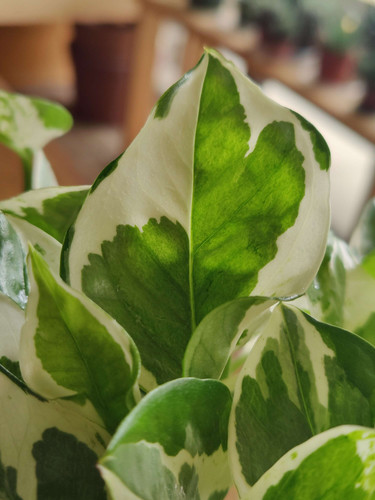
Jade & Pearl Pothos
$15.00
Most pothos grow quickly and their leaves get pretty big, but this variety's leaves grow slower and remain compact. Its variegated leaves grow on vines that can trail or climb. It tolerates long periods of drought and is tough to kill. LIGHT Pearls and Jade Pothos require brighter, filtered light to maintain their bright variegation, though direct light can easily burn their sensitive leaves. Keep her a few feet away from a bright window, filtered by thin curtains or blinds. WATER Allow the soil to dry out between watering Pearls and Jade Pothos as it’s best to underwater than oversaturate the soil.

Scindapsus Truebii Moonlight
$15.00
About: Light Grow Moonlight scindapsus in a spot with medium to bright light to keep it thriving. Not sure how much light that is? Watch to see if the plant casts a medium to strong shadow much of the day. While Moonlight scindapsus prefers a bright spot, it tolerates low light. In dimmer spots, it does not grow as full or as lush. Tip: It does not need natural sunlight to thrive. It enjoys both natural and artificial light. Water Like many other aroids, this vine is sensitive to overwatering, so be sure to let the top couple of inches of the potting mix dry before watering again. Its thick leaves allow it to hold up well if it dries out a bit too much. You might find the leaves start to curl under if it stays too wet or too dry for extended periods. Humidity Moonlight scindapsus prefers above-average relative humidity, but thrives in more average conditions. If you have especially dry air in your home, boost ambient moisture by grouping your Moonlight scindapsus with other houseplants. Or place a small humidifier nearby. You can also grow it on a pebble tray. Fertilizing Fertilize in spring and summer, if you wish, with a fertilizer formulated for use on houseplants. Just be sure to follow the directions on the product packaging. Never apply more fertilizer than the instructions recommend. Pruning Pruning typically isn't necessary for this slow-growing vine. You can pinch back the new growth to encourage it to branch and become fuller, rather than focusing its growth from one main shoot. This variety is grown for ornamental use, and is not intended for human or animal consumption.
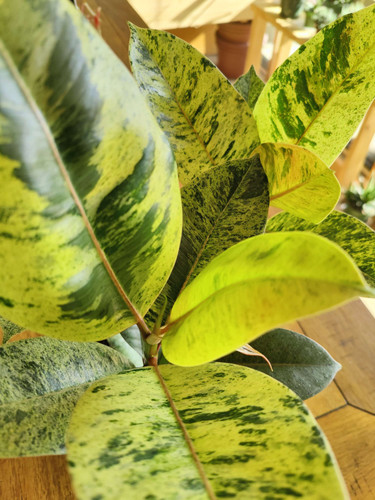
Ficus Shivereana Moonshine
$22.00
Ficus Shivereana Moonshine is one of the rarest and most sought after Ficus varieties. This variety of rubber tree displays highly variegated leaves growing from a central stem. Light and dark shades of green mix with yellows and whites to create gorgeous, mottled leaves - no two leaves are the same! Provide with bright sunlight to encourage increased variegations. after a bath. Soil Requirements for Ficus Shivereana Focuses prefer well-draining soil and benefit from a customized soil mix containing draining and moisture retaining constituents. A correct potting mix is essential for your plant growth and health. We have developed a perfect soil recipe for Ficus plants that will do wonders for your Ficus Shivereana. The soil PH for the marble plant should be between 6.0 to 6.5 as the more acidic soil will cause the plant to decline. Drainage plays the most critical role, and plant enthusiasts shouldn’t ignore it. The soil should be well draining and aerated as overwatering may cause irreversible damage to your plant. A good potting mix also has essential nutrients for your plant’s growth; therefore, use a soil medium rich in nutrients. Fertilizer The Ficus can do well without fertilizers, but using little fertilizers can enrich its development, especially during the growing season. Generally, the potting soil has enough nutrients for the plant’s growth, but the nutrients condense with time when the plant grows; for that reason, the Shivereana needs fertilizer. The best fertilizer for Indian rubber plants is liquid fertilizer, and we have a customized liquid fertilizer formulation to boost the growth of your Ficus plant.

Cebu Blue Pothos
$12.00
Epipremnum pinnatum ‘Cebu blue’ is a pretty and popular variety of pothos with shiny, silvery-blue leaves that seem to sparkle in the right light. Trailing or climbing, Cebu blue is a beautiful addition to any indoor jungle, and it gets bonus points for being such an easy-care plant. Light Cebu blue is fairly laid-back about lighting so it will happily live in a medium light situation, but for the lushest and prettiest foliage give it plenty of bright indirect light. If you choose to move it outside for the summer, find a spot with filtered sunlight such as under a larger plant or tree. Watering Give it a thorough soak and let it dry out a little bit between watering, and your Cebu should be happy. You’ll be able to tell if you’re going too long between watering — you may notice your plant looking wilted or displaying yellowed leaves. Temperature & Humidity The Cebu is tolerant of normal household temperatures and humidity, but if you live in a particularly dry area and see any of the effects of lack of humidity you may want to try a pebble tray, humidifier, or grouping your plants together to boost humidity.

Ficus Yellow Star
$50.00
Yellow Star Ficus require watering when the top two inches of soil are dry. Provide bright indirect light, and a bit of fertilizer to encourage strong growth. They are very communicative plants, and will show you when they don’t like their conditions. Keeping an eye out for dry or yellow leaves, loss of color and brown spots will help you tackle issues early on. Happy in a standard houseplant potting mix. They will show signs of overwatering through yellowing leaves. If they aren’t getting enough water, the tips of the leaves will turn brown and crispy. When bringing a new plant home from the nursery, it’s important to know that they are often grown underneath shade cloth oe ina greenhouse. To prevent burnt leaves, gradually expose your Ficus to a little more sun each day. If you immediately place the tree in a bright, sunny spot the leaves will become sunburnt. Maintain temperatures around 60-68 F. You can move the tree outside during the summer, but don’t forget to bring the plant in as soon as temperatures begin to fall. If you choose to bring your altissima in and out between the seasons, just make sure not to expose the tree to intense changes in temperature. They will lose all their leaves if exposed to a sharp change in temperature. You can prune off damaged leaves and influence the shape of the canopy by strategically cutting off specific branches. Yearly pruning of dead and unnecessary branches will encourage lush foliage. Wait to prune until late winter or early spring, before new growth begins. To prune a branch cut it off with sterilized pruning shears above a leaf node or branching stem. When pruning, watch out for the white milky substance that will ooze out of the cut. It is mildly toxic and can irritate your skin, especially if exposed to sunlight. If you get any of the sap on your skin, wash it off immediately with soap and water. Ficus altissima will not bloom in indoor conditions. In the wild, fig-trees have incredibly peculiar flowers and pollination systems where the flowers are essentially inside out.

Marble Queen Pothos
$12.00
This highly variegated pothos is versatile, forgiving, and easy to grow. They can grow well in nearly any space in your home, and don’t require things like regular pruning or repotting in order to thrive. In fact, marble queen pothos enjoy being slightly rootbound, and should only need to be repotted once every couple of years. Light Hi Color Marble Queen Pothos prefers medium to bright indirect sunlight but can live in lower light conditions. However, the leaves will be smaller, and the vines will become leggy if the light is not bright enough. Artificial light will do just fine for them, but the light should shine for at least 8 hours a day! Water Water the soil thoroughly after the soil is almost completely dry. It is a good indication that it needs water when the leaves start wilting. Water more often in the growing season and reduce the frequency during the winter months. It is best to refrain from watering if you cannot decide if its time to add more. Larger pothos can live without water for longer periods, but younger, less established plants need to be watered on a regular basis until their roots have fully developed. Soil All pothos love loose, nutrient-rich potting soil. Use a soil medium that can retain moisture but also allows for draining excess water to avoid root rot. Most pre-mixed soils will suffice. Make sure that there is plenty of organic matter, like coco-coir, peat moss, or shredded leaves, and avoid soils that contain moisture retaining crystals. If your soil drains too quickly, we recommend re-potting your Hi Color Marble Queen Pothos into a compost-rich soil mixture with fewer drainage materials.

Arbicola Amate Schefflera
$15.00
Native to the shady undersides of the rainforest canopies in Australia and New Guinea, the Schefflera Amate (Schefflera actinophylla) is a fast growing, tropical, and lush tree that can grow up to 65 feet tall in its natural environment! Also known as the Umbrella Tree for its beautiful leaf structure, its bright glossy green leaves add warmth and a touch of the tropics to any space. The Schefflera has adapted well to indoor environments and can survive in medium light spaces, making it a showstopping option for spaces other large plants may struggle in, such as ficus. Place your Schefflera where it will receive medium to bright indirect light such as in a Northern or Eastern facing Window. If your window faces South or West, then it’s best to place it 5-10ft from the window in order to prevent leaf burn. Water when 50-75% of the soil volume is dry. Water thoroughly until you see it flow out of the drainage hole. Discard any excess water in the saucer to avoid root rot

Arbicola Capella
$12.00
Schefflera is a large genus of tropical plants that includes two species that make wonderful tropical houseplants. The larger Schefflera actinophylla (sometimes called the umbrella plant or umbrella tree) features long, shiny, oval green leaves that droop gracefully from a central stalk, resembling an umbrella. A mature Schefflera might have 12 to 16 leaflets from a single stalk, while an immature Schefflera is more likely to have four to six. Schefflera arboricola (sometimes called dwarf Schefflera) features smaller, glossy leaves, sometimes with creamy variegation. Other than the smaller size, it looks very similar to its taller cousin. Light Capella Schefflera prefers bright, indirect light. In the summer, move potted plants outside where they will receive bright light but not direct sun, such as under a patio cover. A Schefflera plant that gets leggy or floppy might not be receiving enough light. Never place a Schefflera in direct, full sunlight because the intense sun can burn the leaves. Soil If growing indoors, plant Schefflera in a rich, loose, well-drained potting soil. When grown outdoors, a well-draining, sandy loam soil with a slightly acidic pH is ideal. Avoid planting in an outdoor location where the soil becomes too wet or waterlogged. Water Water regularly during the growing season and spray the leaves with water frequently. Wait until the soil in the pot dries out and then give it a deep and thorough soaking. Cut back on water during the winter months. Overwatering a Schefflera plant will eventually kill it. Yellow and dropped leaves are a sign that you might be watering too much. Temperature and Humidity Because it is a tropical plant, Schefflera requires fairly high humidity and tropical temperatures; it will suffer in temperatures lower than 60 degrees Fahrenheit. Do not expose these plants to drafts or dry heating vents. An underwatered or cold Schefflera will begin to drop leaves quickly, so take leaf-drop seriously and correct the issue if it occurs. If the plant loses all of its leaves, you can attempt to save the plant by moving it outdoors in the spring and watering generously.

Calathea Amagris Never Never
$15.00
The Calathea Amagris Ctenanthe or the Never Never plant belongs to the tropical rainforests of Brazil and is known to be a challenging plant to grow. This stunning plant has beautiful leaves that have a variety of colors on them. The top part of the leaves is light green, with dark green veins, and the bottom side is purple. Soil Amagris Ctenanthe is capable of surviving in many different types of soil. But you’ll have to pay attention to whether or not the soil is well-draining. Waterlogging can cause several issues for your Amagris Ctenanthe, which is why using a soil mixture that provides the best drainage is necessary. Water Just like any other plant, your Amagris Ctenanthe also needs a proper watering schedule to survive. Amagris Ctenanthe is tolerant to changes in soil moisture level, but an important thing to remember is to never let your Amagris Ctenanthe dry out. Light Amagris Ctenanthe requires bright indirect sunlight to grow well. Whenever you’re planning to grow an Amagris Ctenanthe, make sure to keep the tropical rainforest of Brazil in mind when taking care of it. This plant is used to getting long hours of bright indirect sunlight. It’s used to getting indirect sunlight because of the other much taller plants in the forest that provide it with shade.

Calathea Burle Marx Fishbone
$15.00
Calathea an excellent indoor plant for low-light situations. This low-growing variety features icy-blue leaves with dark green tiger stripes and purple undersides. Happy with indirect bright light, but will also thrive with fluorescent lighting, making it a great choice for the office. This non-toxic plant is safe for pets. LIGHT Bright Indirect Light WATERING Allow soil to dry between waterings.
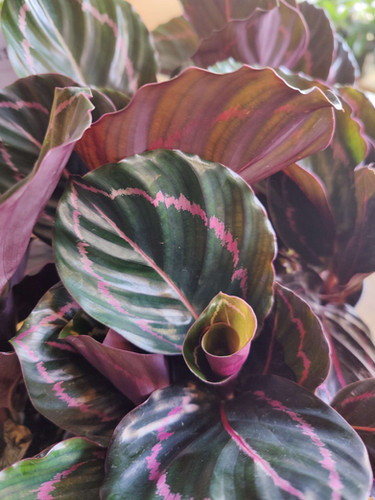
Calathea Roseopicta Dottie
$15.00
Calathea roseopicta ‘Dottie’ is a beautiful houseplant with deep green leaves that feature bright pink stripes. The undersides of the leaves are a rich burgundy color, making for a striking contrast with the pink stripes. The plant is native to the Brazilian rainforest and is known for its unique appearance and low-maintenance care requirements. Light: Does best in bright indirect to medium light. Watering Frequency: Allow the top 2-3 in. to dry before watering. Loves moist soil, but it is easy to overwater Calatheas. Soil: No special requirements Humidity: These are tropical plants that adore high humidity. If they are in drier environment, indulge them with a boost of humidity by misting, or using a humidifier. They’ll be very happy when placed in a bathroom or kitchen. Pests: Can be affected by spider mites and mealy bugs

Calathea Pilosa Golden Mosaic
$15.00
Hailing from Brazil, the evergreen perennial Calathea Pilosa or Golden Mosaic is revered for the strikingly beautiful gold and cream variegations on its large, oval leaves. It belongs to the Marantaceae family, known as 'Prayer Plants,' which, much like humans and unlike most plants, have a wake-and-sleep cycle according to a circadian rhythm. This means the leaves move upwards during the night and downwards throughout the day in search of the sun. Water Keep soil evenly moist and do not let it dry out. Be careful however not to overwater, best to keep the soil slightly moist to the touch. Light Medium indirect light to keep your plant looking bright and bold. Humidity Medium to High Humidity is important to keep your plant happy and avoid dry leaf tips. Fertilizing Feed from Spring through Summer with a diluted feed every 2 weeks and avoid feeding in Winter.
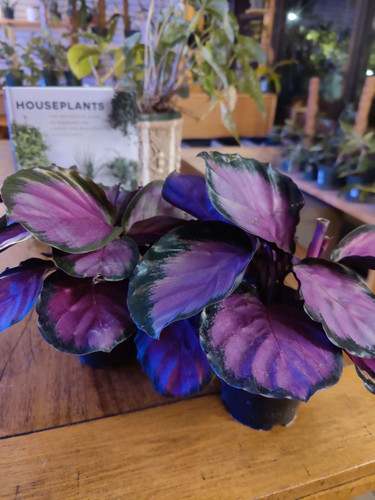
Calathea Roseopicta Rosy
$15.00
This bright and bubbly, low-growing compact shade plant has large round-oval leaves, a bright pink flush and each leaf edged in a band of dark green. Calathea Roseopicta Rosy is a stand out plant which is sure to be your favourite! CARE Water regularly during the first 12 weeks of growing and then regularly once established. Mist regularly if air humidity is low, or place her in the bathroom. She likes to dry out slightly between waterings if grown in indoor pots. HUMIDITY Since calatheas are a tropical plant, a plant humidifer is a must. It emulates the conditions it would receive in the wild, and prevents brown spots. Keeping the humidity high means a fuller plant with regular new growth, FERTILIZER Apply a slow release fertiliser yearly and liquid feed every three months for vibrant healthy foliage. Remove dead leaves to keep plant looking good. Check out our awesome plant care range to keep her healthy and bright. Our slow release fertiliser will ensure you have her for years to come.
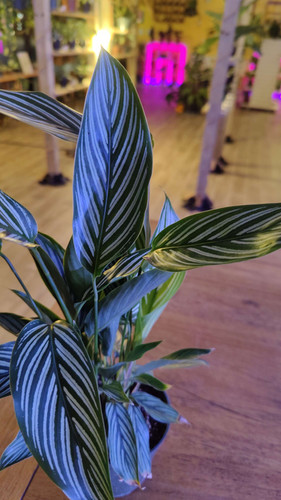
Calathea Vittata
$15.00
The Vittata is considered one of more rare types of Calathea plants. Native to South America Brazil, it thrives in lush rainforests under the tree canopy. Their leaves a dark green and decorated with white stripes, with a burgundy underside. Like other Calatheas, the Vittata will fold up its leaves at night, and then "bloom" open to greet the sunshine, giving it the nickname “prayer plant.” LIGHT In nature, Calatheas live under the canopy of the large rainforest trees and can only get some indirect light. These plants can be finicky, so you might experiment with different spots until you can make your Calathea happy. The Vittata is happier with less light than too much, so if you see brown spots or crispy edges to the leaves, move it to a place with less light. WATER These plants like moist soil, so water when you feel that the top inch or so of the soil is dry. They love humidity, so if you do not have a humidifier, you can put pebbles in a tray and place the pot on top. Any excess water in the soil will drain into the tray and keep the roots humid without adding too much moisture to the soil. GROWTH HABITS Indoors, this plant will wind up closer to 2 feet tall. Their growth rate is moderate, and the plant will go through a period of dormancy in winter.

Calathea Warscewiczii Jungle Velvet
$15.00
This green Calathea variety has soft velvet leaves with 'rabbit tracks' on the leaves. Watch as this plant moves it's leaves to follow the sun throughout the day! Light Hang or set your prayer plant near a window where it will receive indirect sunlight. Never set your plant in direct sunlight because the sun will scorch the plant’s leaves or the leaves will develop blotches or patches and fade in color intensity.1 Prayer plants are generally tolerant of lower light areas. In the winter, when the plants go into dormancy (and sometimes die back completely), provide them with bright light to maintain growth. Soil Prayer plants can prosper in a variety of soils, as long as they're well-draining. Typically, a traditional potting mix works fine, but you can make your own by combining two parts sphagnum peat moss, one part loamy soil, and one part perlite or coarse sand together. In addition, the soil should be acidic, with a pH of 6.0. To improve drainage, add rocks or gravel to the bottom of your pot and be sure that the pot has ample drainage holes. Water During their growing season, water your prayer plant frequently (whenever the top layer becomes dry) and never allow the potting soil to dry out completely. These plants are very susceptible to drought and will not survive long if left unwatered. However, to avoid fungal problems, do not let water sit directly on the leaves or let the plant get soggy. Both insufficient water and overwatering your plant can cause the leaves to turn yellow and drop.2 When watering your prayer plant, use water that is at least at room temperature, if not slightly warm.

Calathea Zebrina
$15.00
This green variety has soft velvet leaves with 'rabbit tracks' on the leaves. Watch as this plant moves it's leaves to follow the sun throughout the day! Light Hang or set your prayer plant near a window where it will receive indirect sunlight. Never set your plant in direct sunlight because the sun will scorch the plant’s leaves or the leaves will develop blotches or patches and fade in color intensity.1 Prayer plants are generally tolerant of lower light areas. In the winter, when the plants go into dormancy (and sometimes die back completely), provide them with bright light to maintain growth. Soil Prayer plants can prosper in a variety of soils, as long as they're well-draining. Typically, a traditional potting mix works fine, but you can make your own by combining two parts sphagnum peat moss, one part loamy soil, and one part perlite or coarse sand together. In addition, the soil should be acidic, with a pH of 6.0. To improve drainage, add rocks or gravel to the bottom of your pot and be sure that the pot has ample drainage holes. Water During their growing season, water your prayer plant frequently (whenever the top layer becomes dry) and never allow the potting soil to dry out completely. These plants are very susceptible to drought and will not survive long if left unwatered. However, to avoid fungal problems, do not let water sit directly on the leaves or let the plant get soggy. Both insufficient water and overwatering your plant can cause the leaves to turn yellow and drop.2 When watering your prayer plant, use water that is at least at room temperature, if not slightly warm.

Dracaena Janet Craig Compacta
$25.00
Native to southeast Africa, the Dracena Compacta — also known as the Dracaena Janet Craig — is an elegant, slim, low maintenance tree similar to the other members of its family. Its tufty foliage is tighter than its cousins', as its name would suggest, making it an excellent addition to corner spaces. These plants are slow growers and therefore ideal if you are looking for a tree of a particular size and shape, as it is unlikely to quickly outgrow the form you buy it in. Dracena trees prefer the soil to dry between waterings, but not completely through the pot. Typically, watering every 10-14 days will keep the soil with a nice even level of moisture. You never want the soil to be soggy as this plant can be prone to root rot, however allowing the soil to get bone dry will result in brown tips on the plant's leaves. It’s a delicate balance, but once you fall into a routine, the Dracaena Compacta will react well to regular waterings. The Dracaena also appreciates a humid environment, and will appreciate a humidifier, pebble tray, or regular misting. Rotate your plant periodically to ensure even growth on all sides and dust the leaves often so the plant can photosynthesize efficiently. When dusting the leaves, also take the opportunity to inspect the undersides and keep an eye out for pests.

Dracaena Silver Stripe
$20.00
The Dracena Silver Stripe Tree is an eye catching tropical houseplant; an upright and lush addition to elevate your space. Hardy and versatile, low maintenance with high aesthetic value. Light A good balance of sun and shade is ideal for this dracaena, but avoid any direct sunlight. Although it grows quicker and better in bright light you'll also find it survives and grows well enough in low light conditions. Water Very sensitive to fluoride in water! If using tap water to water the plant, first let the water sit overnight in a container for the fluoride gas to dissipate into the air. Alternatively, you can use filtered or bottled water. Water very modestly every week or so when the soil is dry to the touch. You only need keep the soil slightly damp, so never over water. Only needs monthly watering during the Winter months and the Dracaena needs a rest period in November and December, so no need to water then but keep an eye on it.

Dracaena Rikki
$45.00
Dracena Rikki is a unique looking plant that has proven itself to be extremely hardy and versatile. It is great in low light, but can tolerate bright light as well. Dracaena Rikki is resistant to most common pests, and can withstand handling much better than its cousin the Corn Plant. Rikki is a relatively new cultivar of the Dracaena deremensis species. It has long, narrow arching leaves that feel like thick plastic. The leaves have varying amounts of yellow through the center. LIGHT Your dracaena can be placed in low to indirect light. Too little light and the foliage will yellow and growth will slow. Too much light and the foliage will burn. WATER Water when 75% of the soil volume is dry. The leading issue with dracaenas is root rot, so keep on the dry side. Always water until you see it flow out of the drainage hole and discard the excess water in the saucer. HUMIDITY Dracaenas do well in average household humidity. TEMPERATURE Your Dracaena will thrive in average room temperatures, between 60-80°F. FOOD The dracaena is slow-growing and does not need much fertilizer. Feed once a month in the spring and summer with general purpose plant food, diluted to half-strength. No fertilizer is necessary during the fall and winter when plant growth naturally slows. Always make sure the soil is damp before applying any fertilizer. TOXICITY Dracaenas are toxic to humans and pets if ingested.

Epipremnum Pinnatum Albo
$45.00
Epipremnum pinnatum ‘Albo-Variegata’ is a pothos variety with green and white variegated leaves that become fenestrated as the plant reaches maturity. It’s one of the rarest and most expensive pothos cultivars and one of the most beautiful. BUTTON Visit The Spruce's homepage Open search form Enter your search termAd GARDENING HOUSEPLANTS TYPES OF HOUSEPLANTS How to Grow and Care for Epipremnum Pinnatum By PEG ALOI Updated on 10/06/23 Reviewed by KATHLEEN MILLER variegated epipremnum pinnatum plant Nora Carol Photography / Getty Images Epipremnum pinnatum, also known as dragon-tail plant, silver vine, and centipede tongavine, is a tropical vine often grown as a house plant. This plant is sometimes confused with a similar plant in the same family, Epipremnum aureum, also known as pothos, money plant, or devil's ivy. Both plants have shiny green leaves and grow vigorously. Epipremnum pinnatum has large, glossy, heart-shaped, dark green leaves. Some cultivars have narrow, smooth-edged leaves, while some have wide, deeply serrated edges. In larger varieties, the leaves may grow up to 3 feet long, and the plant can grow up to 60 feet tall outdoors. But most cultivars chosen for house plants have vines that grow up to 6 feet long and make excellent plants for hanging baskets. Since some epipremnum plants are toxic to dogs and cats, it is best to take precautions if you have pets and avoid having them ingest any part of this plant.1 Common Name Dragon-tail plant, centipede tongavine, silver vine Botanical Name Epipremnum pinnatum Family Araceae Plant Type Tropical vine Mature Size Up to 60 feet tall Sun Exposure Bright, indirect sunlight Soil Type Rich, well-drained Soil pH Slightly acidic Bloom Time N/A Flower Color N/A Hardiness Zones 10-11 (USDA) Native Areas Asia, Australia Toxicity May be toxic to dogs and cats1 Ceba Blue epipremnum pinnatum AnSyvanych / Getty Images Epipremnum Pinnatum Care The main guidelines for caring for this plant are as follows: Epipremnum pinnatum likes bright but indirect sunlight. It needs well-draining, rich soil and a container with good drainage holes. It likes an average amount of water for a tropical; water when the surface of the soil becomes dry, and avoid overwatering. It can benefit from some liquid fertilizer applied in the spring. Light The epipremnum pinnatum can grow in partial shade or partial sun. The best light conditions are bright but indirect sun, which you can achieve by placing it to the side of a window with good sun exposure. Some variegated varieties may need a bit more light, and the plant will tell you this when its leaves stretch towards the sunnier spot of the room. Too much sun can dry this plant or scorch the leaves. Soil This plant likes a rich soil similar to what it might have in its natural habitat: a slightly acidic substrate with plenty of organic matter (which can be added to ordinary potting mix), and excellent drainage. Sandy or clay soils are inappropriate for this plant. Drainage holes in your containers are also necessary. Water Watering your epipremnum pinnatum once a week should be sufficient. Make sure the soil surface is dry before watering. Use lukewarm water and soak the top layer of the soil surface until it is slightly damp. Adjust the watering schedule in winter when the plant grows more slowly and will need less frequent watering. Temperature and Humidity The ideal temperature for epipremnum pinnatum is between 65-75F. If you move the plant to an outdoor location in the summer, it should be in a partial shade area to prevent it from getting too hot. Being a tropical vine, it can handle a fair amount of humidity. In winter, if your house is dry, placing a dish of pebbles with water nearby can help keep the surrounding air moist

Fatsia Japonica
$35.00
About: Fatsia japonica 'Spider's Web' (Japanese Aralia) is an evergreen shrub with large, palmate green leaves bordered with white speckling. Fatsia japonica 'Spider's Web' makes a stunning accent plant in a shady garden - as the plants mature, the variegation becomes more pronounced. Light The Fatsia will appreciate a medium to bright indirect light setting. Direct sunlight should always be avoided as it can burn the leaves. A shady spot that still gets natural light is perfect. Water The Fatsia likes to be kept evenly moist to encourage growth. Let the top ¼ of the soil dry out before watering but make sure to never let the whole plant dry out. When it is ready to be watered, give it enough so water pours out the drainage holes. Humidity The Fatsia does not necessarily need extra humidity to thrive but you should avoid putting it near warm or cold drafts (i.e door or air vent). Soil Fatsia Japonica is not too particular on the type of soil it needs. As long a you use a well draining potting soil your Fatsia will be happy.

Crocodyllus Fern
$12.00
What is a crocodile fern? Native to Australia, crocodile fern (Microsorium musifolium ‘Crocydyllus’), sometimes known as crocodyllus fern, is an unusual plant with wrinkled, puckery leaves. The light green, segmented leaves are marked with dark green veins. Although the distinctive texture has been compared to a crocodile’s hide, the crocodile fern plant actually has a graceful, delicate appearance. Growing crocodile ferns requires a bit more attention than your average houseplant, but crocodile fern care really isn’t involved or complicated. Crocodile ferns need regular water, but the plant won’t last long in soggy, poorly drained soil. A rich, well-drained potting soil such as a soil formulated for African violets works very well. To keep the plant happy, water whenever the surface of the potting mix feels slightly dry. Water until liquid drips through the drainage hole (always use a pot with a drainage hole!), then let the pot drain thoroughly. A kitchen or bathroom is an ideal environment because crocodile ferns benefit from humidity.

Heart Fern
$10.00
About: This delicate fern is beloved by houseplant collectors for its perfectly heart-shaped leaves. Deep green and shiny, the 2-4" leaves grow on short fuzzy stems. The dwarf growth habit of the Heart Fern makes it a perfect choice for small spaces. What's more, since the it loves water, this fern is ideal for containers with or without drainage, and can happily be planted in an enclosed terrarium. Water Hemionitis arifolia needs constant moisture, but don't let them sit in standing water; you will regret it! More importantly, do not neglect to water your Heart Ferns because the require consistently moist soil. Try this little trick if you are unsure how often to water them. Water frequently, but lightly. Instead of soaking your Heart Fern once a week or whenever you water your plants, give them a little bit every few days, or just enough to keep the soil moist but not soggy. If the watering riddle still has you scratching your head, consider planting your ferns into self-watering planters, and don't forget to fill the planters when they dry out! The onus falls on you to ensure that their delicate fronds get the water they need to frond on! Light Medium to bright indirect dappled light will bring out the best in your Heart Ferns (picture them under a thick canopy of trees on a sunny day). Avoid direct sunlight, especially in the summer when the sun's rays are intense! The less light your ferns receive, the slower they will grow, and they may become leggy and thin. If you see this happening, immediately relocate them to a brighter spot! Temperature Heart Ferns adapt quickly to most household temperatures, but they thrive between 75-85°F. When the temperatures are hot and stagnant, we recommend using a fan to provide good air circulation! Moving air helps keep pests and diseases, and fungus away!

Ficus Rubber Tree Burgundy
$10.00
Ficus Rubber Tree Burgundy is an evergreen and popular perennial, adding eye-catching dimensions with its attractive and spectacular looks. The plant features striking dark green leaves with deep reddish variegation and a glossy sheen. The Ficus Burgundy is a dramatic and vigorous plant that offers an intriguing large green trunk similar to an elephant’s foot or tusk. Water The Ficus Burgundy requires ample watering during the growing season; however, it prefers the soil to dry out partially between watering cycles. Therefore, one should check the soil every few days to make sure the soil only dries out partially. During hot summer days, you may need to water your Ficus every couple of days, but ensure that you do not overwater, as this may cause root rot or root damage, which could lead to serious problems later. Light Ficus Burgundy requires medium light exposure to thrive indoors, and it needs to be placed near windows to avoid direct sunlight, as this could result in scorching of leaves. The plant also performs considerably well when placed under fluorescent lights for about 12 hours daily, receiving enough light for healthy growth.

Ficus Rubber Tree Variegated Ruby
$12.00
Although it's usually grown as a colorful houseplant, if you live in a region that remains warm and humid throughout the year, you might want to grow this ornamental plant in your yard. However, be mindful of where you plant it. Although it's not listed as invasive in the U.S., because it grows so rapidly in the right conditions outdoors, it's sometimes referred to as a bit of a weedy thug with fast-spreading roots. Light Ficus Rubber Tree likes the type of bright, indirect light that mimics that found in its natural tropical forest habitat. Getting the balance right to maintain the unique variegation of the tineke cultivar is the biggest challenge for this plant. Too much direct light can scorch the foliage, but overly low-light conditions will see the pink hues on the leaves fade, there will be less new leaf growth, and your plant could become unattractively leggy. Sitting your plant in an east-facing window usually works well, or setting it back from a south- or west-facing window. Your ficus tineke might appreciate a few hours of soft morning sunlight, but avoid direct harsh afternoon rays. Soil Ficus Tineke isn't fussy when it comes to potting mix. Providing it's loose and well-drained, you shouldn't have any problems. They often thrive in slightly acidic cactus mixes.
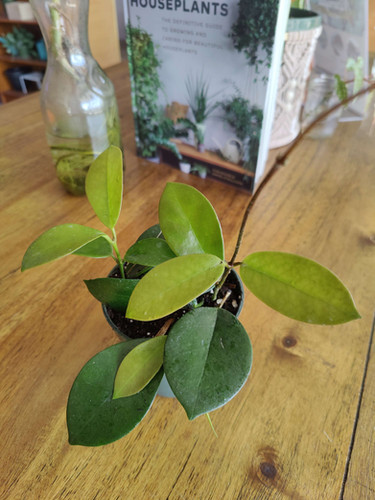
Hoya Australis
$15.00
The Hoya australis attracts butterflies with its beautiful flowers grown in the garden. But, the good news is that this plant grows well indoors. So, go ahead and add it to your houseplant collection. The good news! The Hoya is easy to care for. It has attractive foliage with sweet-scented wax white flowers. In addition, it has a cerise inner marking found under the white corona. Each flower has a five-pointed star shape, and the cluster of flowers in itself looks like a star. Thus, many growers refer to it as the waxvine. Light: Perfect for bright, indirect light • Water: Drought tolerant. Water when the top 1-2" of soil feels dry to the touch • Considerations: Use a well-draining soil, and select a planter with drainage. Pet friendly

Hoya Compacta Rope
$15.00
The Hoya compacta, sometimes referred to as the Hindu rope plant or compact wax plant, may be the ideal option if you're seeking for a tropical plant that is simple to maintain and brings a sense of the tropics into your house. This fast-growing, extremely adaptable plant, which is native to Southeast Asia and the Philippines, is well-known for its clusters of fragrant blooms and glossy, waxy leaves. Light Bright, indirect sunlight is best for this plant, which can be grown both indoors and outdoors. It can survive in lower light conditions, but it would be happier (and grow larger) in a brighter space. Temperature Hoya compacta likes it hot. 70+ degrees Fahrenheit during the day is ideal, as is 60-65 degrees at night. Humidity This plant needs a relatively high humidity level of 40-60%. To amp up indoor humidity levels around your Hoya compacta, place it in a tray containing a layer of rocks and some water, which will evaporate and provide moisture. Another tip is to keep the plant in the bathroom, where it can enjoy all the humidity created by showers and baths. Watering Being part-succulent, this porcelain plant doesn’t require much water. Water it when the top 2-3 inches of soil are dry. The best method is to water it until the water begins to run out the bottom of the pot, then let it rest until it gets dry again. During the growing season (spring and summer), it will need more frequent watering than in winter, when it enters its resting phase. Soil Loose, well-draining soil is best, so your average indoor plant potting soil mix should work just fine, especially if you add in perlite, sphagnum moss, and orchid bark to promote drainage and keep things light and airy.

Hoya Compacta Rope (Variegated)
$25.00
The Hoya compacta, sometimes referred to as the Hindu rope plant or compact wax plant, may be the ideal option if you're seeking for a tropical plant that is simple to maintain and brings a sense of the tropics into your house. This fast-growing, extremely adaptable plant, which is native to Southeast Asia and the Philippines, is well-known for its clusters of fragrant blooms and glossy, waxy leaves. Light Bright, indirect sunlight is best for this plant, which can be grown both indoors and outdoors. It can survive in lower light conditions, but it would be happier (and grow larger) in a brighter space. Temperature Hoya compacta likes it hot. 70+ degrees Fahrenheit during the day is ideal, as is 60-65 degrees at night. Humidity This plant needs a relatively high humidity level of 40-60%. To amp up indoor humidity levels around your Hoya compacta, place it in a tray containing a layer of rocks and some water, which will evaporate and provide moisture. Another tip is to keep the plant in the bathroom, where it can enjoy all the humidity created by showers and baths. Watering Being part-succulent, this porcelain plant doesn’t require much water. Water it when the top 2-3 inches of soil are dry. The best method is to water it until the water begins to run out the bottom of the pot, then let it rest until it gets dry again. During the growing season (spring and summer), it will need more frequent watering than in winter, when it enters its resting phase. Soil Loose, well-draining soil is best, so your average indoor plant potting soil mix should work just fine, especially if you add in perlite, sphagnum moss, and orchid bark to promote drainage and keep things light and airy.

Hoya Khroniana Eskimo
$15.00
The lovely Hoya Khroniana or Eskimo is a trailing plant ideally suited for a hanging basket thanks to its long and gorgeous vines. It can reach up to 8 feet long, so if your ceilings are not high enough, consider placing a climbing pole or trellis nearby. Light Hoya Krohniana 'Super Silver' prefers indirect light. Brighter light will result in better color of the foliage but avoid direct sun which may burn the foliage. Water The leaves of Hoya Krohniana 'Super Silver' are waxy and succulent, and they will tolerate minimum levels of watering. We recommend allowing the soil to nearly completely dry out between waterings. The number one sign of underwatering is drooping, wilted leaves. You can tell if you are overwatering by the leaves yellowing and falling off. Overwatering may eventually lead to root rot. Care Hoyas are epiphytic vines, meaning that they grow on the branches of trees in nature. The roots of epiphytes typically need very well-draining soil to prevent root rot. Hoyas will typically be happy with average household humidity. This plant should be fertilized monthly through the spring and summer with a diluted general houseplant fertilizer. Cuttings can be rooted in water or soil

Hoya Macrophylla
$22.00
Hoya macrophylla is a rare, low-maintenance hoya species with succulent trailing vines, large, waxy leaves, and, if you're lucky, beautiful flowers. This epiphyte or air plant can grow on other plants or surfaces, not just in soil, getting nutrients and moisture from the air vapor and debris on top of the surfaces. It's ideal for hanging baskets or growing up trellises. Light Don't put your Hoya macrophylla in a spot with continual direct sunlight and you should be good. A shelf a few feet away from an eastern-facing window is an ideal spot, as too much direct sun can burn the foliage tips. Your plant still needs some light, so avoid a position in the shade to prevent a leggy, lop-sided appearance. Soil It's easy to pick up a potting mix specially designed for hoyas. They're often slightly alkaline and always well-drained. If you're making up one of your own, avoid acidic peat and pick a well-draining mix (like one designed for cacti). Add one part perlite and one part orchid mix. Adding crushed eggshells provides plenty of the calcium these plants like. Water If you want to avoid killing off your Hoya macrophylla, don't forget it doesn't like wet feet. Overwatering is the biggest problem for this plant and often leads to root rot. Let it dry out completely before giving it a thorough soaking. It's the sort of plant you can submerge in a tub of water to ensure it's evenly wet.

Philodendron Paraiso Verde
$18.00
Philodendron paraiso verde is a tropical plant known for its colorful variegation and growth habit. It has long, deeply lobed green leaves speckled with irregular yellow and light green markings. This climbing philodendron prefers warmth, humidity, well-drained soil, and bright, indirect light. With the proper care and conditions, it's a fast-growing plant that requires a moss pole or other support to climb. Light Like other philodendrons, philodendron paraiso verde grows best with medium to bright indirect light or filtered sunlight. Place it in an east-facing window to receive weaker morning light or several feet from a south-facing or west-facing window, out of direct sun. You can also use a sheer curtain to filter strong afternoon light. Keep the plant out of direct sunlight, which can cause brown spots to appear on the leaves and will stress the plant. Soil Philodendron paraiso verde needs a potting mix that will drain well while retaining moisture. Use a pre-made around mix or make your own by blending equal parts potting mix, orchid bark, and perlite. Water Check soil moisture regularly to determine when to water your philodendron paraiso verde. Water when the top half of the soil in the pot has dried out. Check cache pots and drip trays to ensure the plant isn't sitting in water, which can cause root rot. Keep in mind that you'll need to water more frequently in the spring and summer than in the colder months.

Syngonium Wendlandii Black Velvet
$12.00
Syngonium Black Velvet is a unique and hard to find syngonium variety. This plant displays elongated leaves with a velvet texture in a dark shade of green (nearly black). Bright white veins make this an eye catching plant! Light Although these plants are extremely low light tolerant, they will grow faster and maintain their vibrant coloring and markings if grown in medium to bright indirect light. Direct sun will scorch their leaves. Syngonium can also be grown under artificial light sources if your space is light-challenged. Try moving your Arrowhead vines closer to the light source during the winter months and remember to rotate your plants every time you water them, or attend to them, to encourage a full-bodied plant! Water Allow these indoor plants to dry out partially between watering. If left dry for too long the lower leaves will dry up and turn brown. If this happens, soak the soil and let the plant re-hydrate. When the soil stays wet for extended periods of time, the leaves will start to turn yellow or brown. When a plant is over watered the soil becomes waterlogged, preventing oxygen from reaching the roots. This bog-like condition of the soil is a perfect breeding pond of bacteria and disease. This is meant to scare you away from over watering! Temperature Syngonium wendlandii will grow in most household temperatures ranging from 60-80 degrees Fahrenheit. They do not like the temps to drop below 50℉. Keep them away from drafts and doorways during the winter months. Humidity Average household humidity 40-50% is adequate for these indoor plants, but most houseplants benefit from humidity over 60% if you can provide it. Fertilizer Syngonium wendlandii should be fertilized during the growing season with ½ strength complete liquid fertilizer twice a month. Or use a slow release fertilizer or top dress with worm castings or compost in early spring.

Dracaena Marginata Kiwi
$45.00
Introducing the very elegant Dracena marginata ‘Kiwi’ or Dragon Tree. The Dragon Tree is absolutely stunning with its mix of both green stripes and ivory, its coloring will bring so much light to any indoor space. Light As it thrives most in filtered, bright, indirect light, keep your Dragon Tree out of any direct light. Direct sunlight exposure can damage the leaves (unless the plant was originally grown in the direct sun). Water Dracaenas have a reputation for not needing a lot of water. True, but they need a thorough soaking when the soil dries out! Remember -- all plants need water! Dracaenas planted in a six-inch pot should be watered when the soil is dry four inches below the top. Use filtered water, rainwater, or distilled water, as these plants don’t like salts or minerals. Dracaenas prefer dry soil over constantly damp; soggy soil promotes fungus and root rot. Soil Nutrient-rich potting soil that is loose and drains well, but still allows for moisture to reach the roots for a few days, is essential for your Dragon Tree. Most pre-mixed soils will suffice. Make sure that there is plenty of organic matter, like coco-coir, peat moss, or shredded leaves, and avoid soils that contain moisture retaining crystals.

Scindapsus Exotica Silver Splash
$12.00
Commonly known as satin pothos, Scindapsus pictus ‘Exotica’ is an evergreen climbing plant in the family Araceae that is a popular houseplant. This stunning plant is characterized by large, heart-shaped green leaves that are splashed with shimmery silver variegation. It is sometimes confused with its close relative the Scindapsus pictus ‘Argyraeus’, but can be differentiated by its foliage which is considerably larger and thicker. Light In its natural habitat the Scindapsus pictus ‘Exotica’ is a forest understory plant so a location that receives several hours of bright, indirect light is best. However, it can also tolerate medium to low light fairly well, although it will put out very minimal growth in low light conditions. Avoid direct sunlight as it will burn the leaves of this tropical plant. Soil This plant is sensitive to root rot so should be planted in a loose, well-draining potting mix that retains water without being soggy. At the same time, the Exotica does best in soil that is fertile and rich with organic materials. A combination of equal parts orchid bark, coco peat, potting soil, and perlite makes an excellent soil mixture for these plants that is airy, fertile, and moist but well-draining. Water The Scindapsus pictus ‘Exotica’ should be watered once the top 2 to 3 inches of soil is dry. Never allow the plant to dry out completely as this can quickly shrivel the roots, but it also should not be kept consistently wet as this can lead to root rot. In the summer when it is actively growing you may need to water your plant every week, whereas in the winter you can cut back on watering significantly.

Philodendron Painted Lady
$18.00
The painted lady philodendron (Philodendron erubescens ‘Painted Lady’) is a stunning P. erubescens hybrid that is prized for its highly variegated large green and yellow leaves, pink and red petioles, and climbing growth habit. It is a favorite among collectors and philodendron enthusiasts but is also becoming popular among regular growers. Light To keep the variegation bright, keep your painted lady philodendron in a location that receives several hours of bright, indirect light. Don’t be afraid to add a grow light to your setup if your home doesn't get enough natural light. Soil Painted lady philodendrons are epiphytes, which means they do best in a rich, airy soil mix. Ideally, the soil should be well-draining while retaining some moisture, and contain plenty of organic matter. A combination of indoor potting soil, perlite, and orchid bark mix is ideal. Water Allow the soil to almost dry completely and then water thoroughly until excess water is pouring from the pot’s drainage holes. These philodendrons are sensitive to overwatering and should never be left sitting in soggy soil, but appreciate the soak-and-dry method of watering. Cut back on watering slightly in fall and winter as the plant’s growth slows down.

Philodendron Brasil
$12.00
The philodendron Brasil is a cultivator of the popular heartleaf philodendron and is characterized by its dark green, heart-shaped leaves with distinctive splashes of lime green variegation.

Philodendron Florida Ghost
$35.00
Florida Ghost is one of the most sought-after houseplants, and with good reason. This rare tropical plant is known for its shiny, deeply lobed leaves on hairy red petioles that unfurl ghostly white before eventually darkening to a deep, attractive green. You'll sometimes see variegated versions of this plant, with green patterning against the white on immature leaves. Some specimens whose young leaves emerge pale green rather than white are referred to as Florida Ghost Mint by houseplant collectors. Light Keep your philodendron Florida Ghost in a place with lots of bright, indirect light. Leaves will eventually fade to green as they mature, but lots of light will help your plant put out the creamy white young leaves this plant is known for. Some growers swear by grow lights to ensure the leaves start out white. However, it's important to keep your plant out of direct sunlight, which can burn the leaves and harm your plant. Soil Plant philodendron Florida Ghost in a loose, rich potting mix. You want a mix that drains well but holds onto the moisture your plant needs to stay healthy. This can be a standard indoor potting mix with some perlite or orchid bark mixed in for drainage. You can also use a premade aroid mix if you don't want to make your own growing medium. Water Your philodendron Florida Ghost requires soil that's moist but not soggy. Water your plant when the top inch or so has dried out and always keep your plant in a pot with drainage holes. Check drip trays after watering and pour off any excess so the plant isn't sitting in water, which can lead to root rot. When the plant goes dormant in winter, cut back on watering and monitor the soil moisture to avoid overwatering.

Philodendron Billietiae
$22.00
If you’re looking for a houseplant with large, show-stopping leaves look no further than the majestic Philodendron billietiae. This tropical houseplant is beloved among houseplant enthusiasts and collectors for its elongated, spade-shaped leaves. It’s considered relatively rare and difficult to find, although as it’s becoming more well-known this Philodendron is getting easier to get your hands on. Like all Philodendrons, the Philodendron billietiae is considered toxic to pets if ingested. Light In its native environment, the Philodendron billietiae grows under the rainforest canopy so it does best with bright, indirect light. Small periods of direct sunlight, particularly in the morning and evening, are fine for this plant but avoid prolonged periods of harsh direct light which can burn the leaves. Soil This tropical plant enjoys soil that is moist but well-drained. It is sensitive to overwatering so ensuring there is enough drainage in the soil is important. A mixture of indoor potting soil, perlite, and orchid bark or vermiculite is ideal. Water The Philodendron billietiae needs consistent moisture, but is also sensitive to overwatering. Allow the top one to two inches of soil to dry out between waterings and then water thoroughly, letting the excess water drain from the pot. Keep in mind that the plant will need to be watered more frequently in spring and summer than in fall and winter, so be sure to adjust your watering schedule accordingly.

Pothos Snow Queen
$12.00
Pothos plants can live for many years with basic care and are super adaptable, as various light, soil, and moisture conditions suit them. They're fast-growing plants even indoors, often adding between 12 to 18 inches of length in a month. Be aware that pothos plants are toxic to pets. Light Pothos likes sun or shade, but you need to watch if it's in too much of either one. When grown indoors, pothos prefers bright but indirect light. Variegated plants sometimes lose their leaf pattern and revert to all-green foliage if they don't receive enough light. Moving them to brighter conditions usually restores the variegation. Suddenly pale-looking leaves mean the plant is receiving too much direct sun. Soil Pothos plants thrive in ordinary, well-draining potting soil that can be on the dry side or even rocky. Pothos thrives in a soil pH ranging from 6.1 to 6.8. It is tolerant of a range of conditions, from neutral to slightly acidic. Water Let your pothos plant's soil dry out completely between waterings. If left in continually damp soil, the plant's roots will rot. Black spots on the leaves (or the sudden collapse of the plant) indicate that the soil has been kept too wet.

Pothos Neon
$12.00
Pothos plants can live for many years with basic care and are super adaptable, as various light, soil, and moisture conditions suit them. They're fast-growing plants even indoors, often adding between 12 to 18 inches of length in a month. Be aware that pothos plants are toxic to pets. Light Pothos likes sun or shade, but you need to watch if it's in too much of either one. When grown indoors, pothos prefers bright but indirect light. Variegated plants sometimes lose their leaf pattern and revert to all-green foliage if they don't receive enough light. Moving them to brighter conditions usually restores the variegation. Suddenly pale-looking leaves mean the plant is receiving too much direct sun. Soil Pothos plants thrive in ordinary, well-draining potting soil that can be on the dry side or even rocky. Pothos thrives in a soil pH ranging from 6.1 to 6.8. It is tolerant of a range of conditions, from neutral to slightly acidic. Water Let your pothos plant's soil dry out completely between waterings. If left in continually damp soil, the plant's roots will rot. Black spots on the leaves (or the sudden collapse of the plant) indicate that the soil has been kept too wet.

Golden Pothos
$12.00
Pothos plants can live for many years with basic care and are super adaptable, as various light, soil, and moisture conditions suit them. They're fast-growing plants even indoors, often adding between 12 to 18 inches of length in a month. Be aware that pothos plants are toxic to pets. Light Pothos likes sun or shade, but you need to watch if it's in too much of either one. When grown indoors, pothos prefers bright but indirect light. Variegated plants sometimes lose their leaf pattern and revert to all-green foliage if they don't receive enough light. Moving them to brighter conditions usually restores the variegation. Suddenly pale-looking leaves mean the plant is receiving too much direct sun. Soil Pothos plants thrive in ordinary, well-draining potting soil that can be on the dry side or even rocky. Pothos thrives in a soil pH ranging from 6.1 to 6.8. It is tolerant of a range of conditions, from neutral to slightly acidic. Water Let your pothos plant's soil dry out completely between waterings. If left in continually damp soil, the plant's roots will rot. Black spots on the leaves (or the sudden collapse of the plant) indicate that the soil has been kept too wet.

Syngonium Pink Perfection
$15.00
The Syngonium Pink Perfection is an arrowhead syngonium with pink foliage and some green spots along the margins. It’s a very easy to care for houseplant that will add a pop of color to your home! Light We like to offer this plant moderate indirect light. We do not recommend allowing any direct sunlight to hit the foliage as this will cause it to burn. We would suggest an east-facing window for this plant. Water We like to water this plant when the top inch or two of soil is about dry to the touch. Too much water will lead to yellowing leaves that will eventually drop. When not watered enough it will show brown crispy tips on its foliage. Care The Syngonium is relatively easy to care for. It will enjoy being fertilized monthly in the growing season. We recommend a general houseplant fertilizer diluted to about half. It will trail in a hanging basket or go up a trellis. This plant can be easily propagated by taking cuttings and placing them in water or directly into soil. We like to wipe the leaves down monthly with neem oil to keep them clean and to keep any pests away.
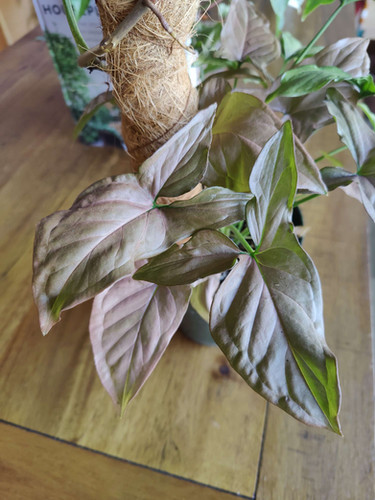
Syngonium Strawberry Cream
$15.00
About: Syngonium podophyllum ‘Strawberry Cream’ is one of many attractive Arrowhead Plants, and is quite versatile when cultivated indoors. Its remarkable foliage emerges a creamy pink color that may mellow out to green with pink veining as the plant develops. This Aroid thrives in low to bright indirect sunlight, though it can’t tolerate any direct beams on the tender leaves. As a tropical understory plant, it is a natural climber, and it will happily snake up a moss pole to produce mature foliage. New growth can be pinched back to create a bushier appearance, or you can simply let it vine and sprawl organically in your space! Water Water when the soil surface starts to dry. This plant likes to be on the moist side, but not wet or soggy. My arrowhead plant is about 4 feet from an east facing window (pretty sunny) and watering weekly does the job. Soil These plants enjoy a rich organic mix of soil. Many recommend using an african violet soil mix. You can use a potting soil that is rich in fertilizer. Light This plant can tolerate shaded light, but the more variegated and splashes of color,the more light required. It’s best to place indirect light. Propagation You can propagate by taking a cutting (right below a node – typically located below where a new leaf grows from) or by plant division.