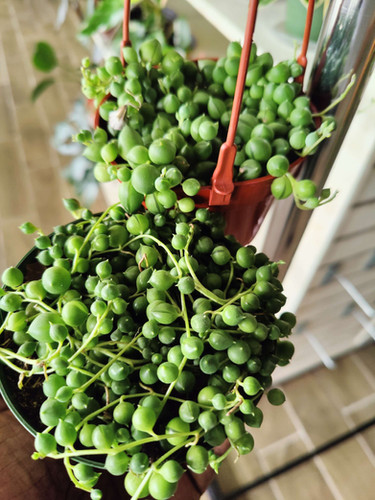
String of Pearls
ID: #792952
Description
What is a String of Pearls Plant? The String of Pearls plant is an extremely unique looking succulent, drawing many fans who love it not only for its look but also for its ease of care! The bubble or pearl-like leaves look striking draping down over a basket or from the top of a bookshelf. Just like other succulents, there are some tricks to make sure these plants survive happily, but with a bit of knowledge under your belt, you can easily help this plant succeed! These plants are native to the deserts of South West Africa, where they root happily as a ground cover. They thrive even with the minimal water there, and root and vine across the desert. The reason they have such oddly shaped bubble-like leaves is an adaptation to this environment. They use these "pearls" to store water, and the shape leaves less leaf surface to prevent extra evaporation and water loss. If you already are in love, Lively Root lets you buy indoor plants online, such as the String of Pearls plant! Toxicity Level The String of Pearls plant is toxic for pets, cats, dogs, and people! Within the sap is a substance called pyrrolizidine alkaloid, which can cause digestive distress if eaten, such as vomiting. If skin comes into contact with the sap, it also can cause irritation to your skin, such as rashes and dermatitis. Keep this one away from any curious furry friends or children who may not know better! Care Level Succulents such as the String of Pearls are notoriously easy to care for, but there is a caveat. To succeed with these plants, you need special knowledge for how to properly prevent the prevalent issues that succulents have. Making sure you pick the correct soil like a cactus and succulent mix is vital. Choosing a pot with good drainage holes is a must to help fight against root rot, the number one killer of succulents! These plants are a little less needy for sun than their other standard succulent counterparts, preferring an eastern or southern exposure, but do prefer a higher humidity environment. Great for People: Who are looking for something unique Who are on the go and need lower-maintenance plants Who love to share plants with friends Who love a variety of colors and textures Who want a plant that can decorate a hanging basket Great for Spaces Like: Homes with bright, indirect light The top of a bookshelf or mantle Humid spaces Hanging baskets Eastern or Southern windows How to Care for a String of Pearls Plant Light preference String of Pearls plants enjoy bright, indirect light. They would love a window with an eastern or southern exposure! They love a spot that gets more direct light in the mornings and then more indirect light later throughout the afternoon. Make sure they get about 6 to 8 hours of sun a day to keep them thriving! Water/Humidity When you water your String of Pearls, give them a good soak every week or two. To check, stick your finger or a wooden skewer into the soil to ensure that the first couple of inches are starting to dry out. Water thoroughly and ensure that the pot drains completely. If the tray beneath the plant has sitting water, pour it out or dry it with a towel. If too much water sits in the saucer or tray for too long, it can encourage root rot. Ideal Temps String of Pearl plants prefer an indoor temperature of about 65°F to 75°F. Make sure that there are no drafts in the area you put this plant, so avoid colder windows or AC vents. Some people like to force the plant into dormancy by keeping it in a room that is 55°F-60°F over the winter to create better blooms the following spring. Plant Food/Fertilizer There are special fertilizers for succulents that are better formulated to help them thrive. You can easily find this kind of fertilizer labeled as "cactus and succulent food concentrate" or other similar names. Make sure that when you apply the food, it doesn't sit on the plant's leaves. Once a month is preferred for String of Pearls feeding schedule! Repotting Frequency You only really need to repot your String of Pearls every three years or when they are outgrowing their pot. Only enlarge the container by one pot size when switching over. If possible, avoid breaking any of the tendrils, and make sure the stems are gently unfurled down the sides of the pot so they can hang properly. Water after repotting and wait a month before feeding it again. When you first get your plant, make sure to give them 6-12 months to acclimate before swapping their home. Of course, if they start to overcrowd the pot or the roots rise to the surface, you can move them earlier. Follow our guide when repotting for extra help! Propagation During the growing season in the spring and summer, you can clip off a string and separate it into a single strand. Prepare some succulent and cactus soil mix and water it, then lay the whole stem in a circle on top of the soil. You will soon see it start to grow tendrils! Otherwise, you can remove pearls from the base of the stem, dip them in rooting hormone, and push them down into an appropriate soil. We suggest using a few cuttings to start in your new planter! Cleaning You can trim the stems on the side of your String of Pearls to promote more growth and gain a fuller foliage on top, then use these cuttings in propagation! If you notice dust or debris on the pearls, you can either use a damp cloth or spritz water on them to help remove the extra dirt so that they can fully soak up the sun.
Price
$15.00
Last Updated
10 August 2026, 10:23 UTC
Store Information
physical store
Location
More from The Plant Trap
View all
Monstera Deliciosa
$12.00
Monstera deliciosa, the Swiss cheese plant or split-leaf philodendron is a species of flowering plant native to tropical forests of southern Mexico. Rarely if ever flowering indoors, the beauty of this plant can be seen in any form. Includes one large cutting with two or three leaves. This may include a "leafing" leaf, or leaf that has not fully uncurled. *Pet Friendliness - Not Pet Friendly* Plant Care Instructions: - soil should be chunky, and well draining. - water every one to two weeks - temp 65 to 90 degrees. Common problems: Leaves brown at the edges - underwatered, nutrient build up. Wilting - Underwatered or pot-bound Yellowing leaves - Overwatered Propagation assistance: Monstera Deliciosa can be very easy to propagate using a sharp pair scissors and a couple of jars of water. Take cuttings at the node. A node can be found near aerial root locations. This is where new leaves and roots form. Cut here and place in water. Change the water weekly and wait. Patience is your friend on this journey but worth the process.

Monstera Adansonii Swiss Cheese
$15.00
A native to Costa Rica and known more commonly by its nickname, the "Swiss Cheese" plant, or Monstera Adansonii is popular for the unique holes throughout it's leaf. *Pet Friendliness - Not Pet Friendly* Plant Care Instructions: - soil should be light, and well draining. - water every one to two weeks - temp 65 to 90 degrees. Common problems: Leaves brown at the edges - underwatered, nutrient build up. Wilting - Underwatered or pot-bound Yellowing leaves - Overwatered Propagation assistance: Monstera Deliciosa can be very easy to propagate using a sharp pair scissors and a couple of jars of water. Take cuttings at the node. A node can be found near aerial root locations. This is where new leaves and roots form. Cut here and place in water. Change the water weekly and wait. Patience is your friend on this journey but worth the process.

Alocasia Sinuata Quilted Dream
$15.00
About: Similar to the Alocasia Dragon Scale this Alocasia has textured leaves which make it appear bumpy and you can see the veining through that leaves. This houseplant grows taller and has a bright green color. *Pet Friendliness - Not Pet Friendly* Care: Light: Prefers bright, indirect light. A small amount of direct sun is OK but too much will scorch the leaves. Temperature: This plant will thrive at temperatures of 62-85F. Water: Drench thoroughly then allow the top 1 inch of soil to dry out before watering again. Water less frequently in winter months when the plant's growth slows.. Humidity: High. To raise the humidity around your plant, place the pot in a shallow saucer full of pebbles. Add water to the saucer until the pebbles are almost submerged. This will create a humid environment for the plant.

Alocasia Amazonica Polly
$15.00
Alocasia amazonica 'Polly' is a compact houseplant from the elephant ear family, known for its distinctive glossy leaves that conjure up images of an Amazonian jungle —despite not being from the Amazon (or any jungle, for that matter). Also known as the African mask plant, it's the most popular Alocasia grown indoors. *Pet Friendliness - Not Pet Friendly* Light Alocasia Polly thrive in medium to bright, indirect sunlight. Be aware that they are not suited to low light or direct sunlight - which can scorch their leaves. Water Alocasia Polly enjoy weekly watering sessions and frequent misting, keeping their soil moist but not wet. In winter, we recommend allowing the top 2’ of soil to dry out between waterings to prevent overwatering and root rot. This plant is not drought tolerant, and extended periods of dryness will cause leaf edges to brown. Humidity Your Alocasia Polly will also appreciate being placed in a humid environment, which you can create by misting it frequently, placing it close to other plants or on a pebble tray partly filled with water. Temperature Your Alocasia Polly will thrive in temperatures ranging from 18-25ºC. Avoid abrupt temperature changes and cold drafts. Fertiliser Feed with general houseplant fertiliser monthly during the growing season (spring to summer). Toxicity Alocasia Polly is toxic to both people and animals - keep away from small children and pets. Additional Care Alocasia Polly can easily be propagated in water because of its semi-aquatic, swamp-dwelling ancestors. During the plant’s dormancy, move it to somewhere warm and reduce your watering until it starts growing again in spring. Troubleshooting • Yellowing or spotting on leaves: suggests the plant has been overwatered - make sure you allow the top soil to dry out before watering the plant again, especially in winter. • Browning edges: indicate the plant has either been underwatered or scorched by direct sunlight. Make sure your Alocasia Polly only receives bright, indirect sunlight. • Leaves fading and dying in fall/winter: Alocasia Polly goes into dormancy as temperatures drop and days shorten. Don’t panic if this happens, but reduce your watering.

Philodendron Summer Glory
$18.00
Philodendron “Summer Glory” is a new hybrid of Philodendron Gloriosum and an unnamed McColley’s hybrid. The new leaves on “Summer Glory” emerge a pinkish red before hardening off to green. “Summer Glory” has a terrestrial growth habit and will not climb. *Pet Friendliness - Not Pet Friendly* Additional info: Philodendron is one of the most popular genuses of Aroid that are currently in cultivation, with over 450 named cultivars. Philodendron vary greatly in their natural habits, but you will find a large number of them located in Latin America. Their leaves range from small to medium to large to gigantic! You'll find Philodendron with smooth, glossy foliage and some with velvety foliage! If you allow Philodendron to climb, their foliage will usually get much larger the higher up they get. While this isn't true for all Philodendron species -- it is for most. We recommend a coco pole to really get your Philodendron growing! For the most part, Philodendron are easy to care for. The name Philodendron comes from the greek words "philo" (love or affection) and "dendron" (tree).

Alocasia Chantrieri African Mask
$30.00
About: Alocasias, commonly known as an "Elephant Ear," are known for its distinctly shaped leaves. This 'Chantrieri' variety is less common and features bold, deep green leave with a strong burgundy underside. The dark rubbery foliage emerges a with a deep inky blue tint. *Pet Friendliness - Not Pet Friendly* LIGHT: Bright indirect light or direct morning sun. Avoid strong afternoon sun. Rotate regularly to keep plant growing symmetrically. WATER: Allow top 25% of the soil to dry slightly between waterings. POTTING: Not recommended for potting in a container without a drain hole. Plants must have a well-draining soil medium to ensure the roots do not rot. FERTILIZE: Spring through fall 1x/mo with 1/2 strength fertilizer TOXICITY: This plant is toxic.